Performance
·22 min read
The Hidden Performance Lever Most Athletes Get Wrong
Good stress vs. bad stress in athletes: how eustress and distress impact the performance and longevity of high-level athletes.
By Conor Rightmire & Tony Medrano
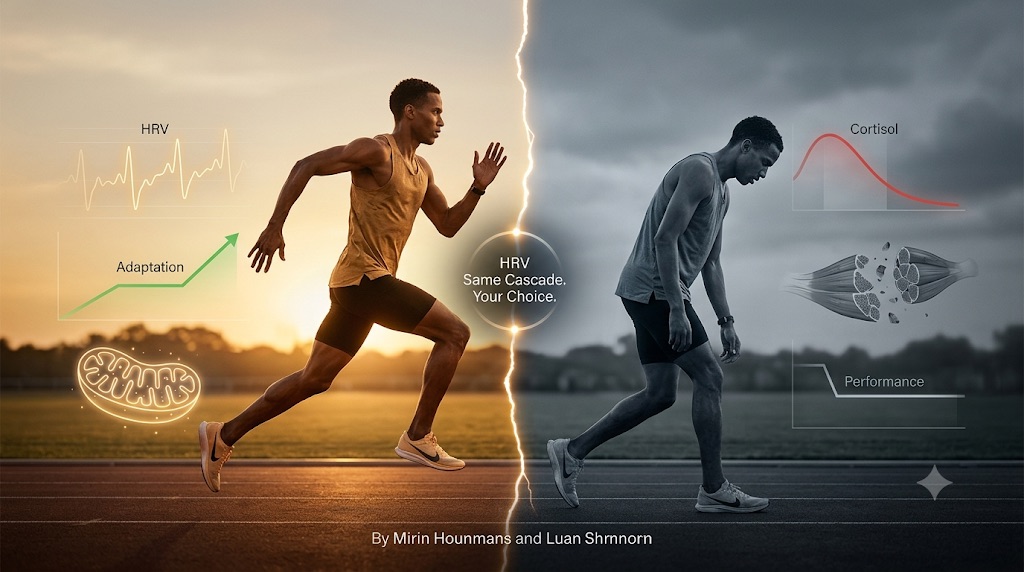
"What doesn't kill you doesn't necessarily make you stronger - it depends entirely on the dose, the timing, and whether your body ever gets the chance to recover." - A working principle increasingly used in the training rooms of the NFL, NASA, and the U.S. Olympic and Paralympic Committee.
You taper perfectly. You hit your splits. And then, for no apparent reason, your race goes sideways: legs heavy, HRV in the basement, motivation gone. Or the opposite happens - the workout you dreaded becomes the breakthrough session of your season, your focus sharpens, and you walk away fitter and more confident than when you started.
Same biological machinery. Wildly different outcomes.
Welcome to one of the most consequential and most misunderstood variables in competitive sport and longevity medicine: the distinction between eustress, the adaptive stress that builds resilience, and distress, the chronic, unresolved stress that quietly dismantles it. The two states activate nearly identical hormonal and neurological pathways. What separates them is not the stressor itself, but its dose, its duration, and the body's ability to recover from it.
This article walks through the science in a logical sequence: what stress actually does to the body, how good stress makes athletes fitter and sharper, how bad stress degrades recovery and long-term health, and - most practically - what athletes can do right now, in their training and in their heads, to keep the balance in their favor.
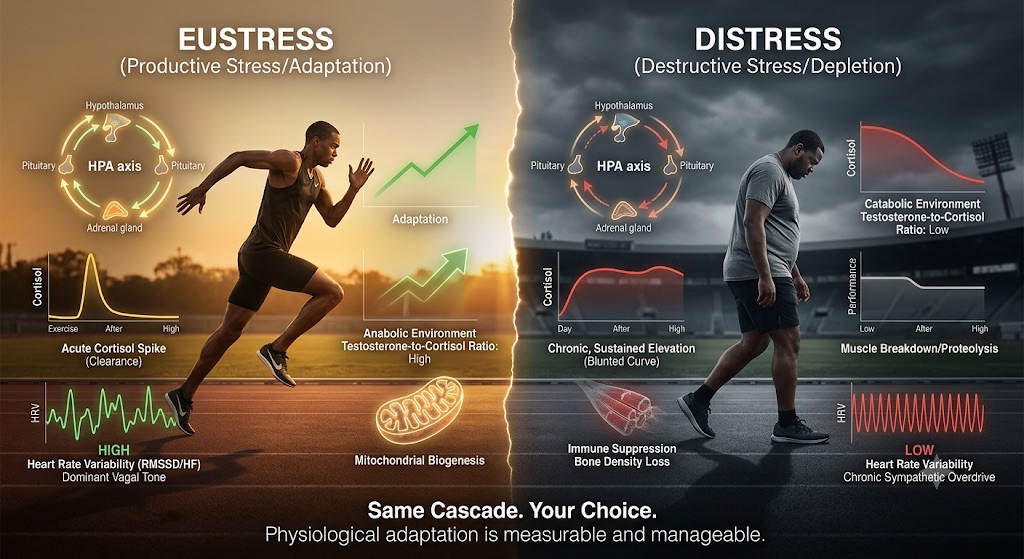
The identical HPA axis cascade produces opposite physiological outcomes depending on dose, duration, and recovery. Left: eustress drives mitochondrial biogenesis, BDNF elevation, and cardiac remodeling. Right: chronic distress produces immune suppression, muscle catabolism, and HPA axis exhaustion.
Part I: One Hormonal Cascade, Two Opposite Outcomes
Understanding the difference between good and bad stress starts with one simple fact: the biology is identical. Both eustress and distress activate the same cascade. The hypothalamic-pituitary-adrenal (HPA) axis fires, corticotropin-releasing hormone triggers ACTH release from the pituitary, and the adrenal cortex produces cortisol. Simultaneously, the sympathetic nervous system floods the body with catecholamines - epinephrine and norepinephrine. [1]
This cascade is ancient, conserved across mammals, and in the right dose, extraordinarily powerful. The deciding variable is not the pathway itself but what happens next: is the stress resolved? Does the body get to recover?
Hungarian-Canadian endocrinologist Hans Selye was the first to formally map this terrain. In 1936, he described the General Adaptation Syndrome - the body's three-stage response of alarm, resistance, and exhaustion to any stressor. [1] Nearly four decades later, in his 1974 book Stress Without Distress, Selye introduced the term eustress (from the Greek eu, meaning "good") to capture a crucial distinction his earlier model had not made: that some stress is not merely tolerable but genuinely beneficial. [1b] His core insight, which got buried under decades of "stress is bad for you" messaging, was that stress is not the enemy of health. In the right dose, it is a precondition for growth. Without resolution, it becomes the engine of decline.
This is the organizing principle of modern performance science, and it is the lens through which everything that follows should be read.
The Hormesis Principle: Why Dose Is Everything
The concept of hormesis - the biphasic dose-response relationship in which low-to-moderate stress produces beneficial adaptation while high-dose or chronic exposure produces harm - is among the most powerful frameworks in longevity biology. [2] Exercise is the best-studied hormetic stressor in human physiology. A properly dosed training load stimulates mitochondrial biogenesis, upregulates antioxidant enzyme systems, activates heat shock proteins, and engages the AMPK and mTOR signaling pathways, which are central to cellular repair. [2]
The hormetic sweet spot, however, is not a fixed number. It shifts with age, sleep quality, nutritional status, psychological load, and training history - which is precisely why generic, population-based training programs fail the individual almost by design.
The Allostatic Load Problem
The late Rockefeller University neuroendocrinologist Bruce McEwen introduced the concept of allostatic load to describe what happens when the system is chronically stressed without adequate recovery: the cumulative physiological "wear and tear" that accumulates not from any single stressor, but from the unrelenting total burden of stress that never fully resolves. [3] Eustress keeps the allostatic account in surplus. Distress drives it into overdraft - and the overdraft compounds in ways that eventually show up not just in declining performance, but in accelerated aging.
Part II: How Good Stress Builds the Body
With the framework established, the question becomes concrete: what does eustress actually do to an athlete's body? The answer, examined system by system, explains why athletes who train hard and recover well don't just perform better - they live longer.
Muscle and Connective Tissue
Mechanical stress applied to muscle fibers triggers satellite cell activation - the proliferation of muscle stem cells that fuse with existing fibers to rebuild them stronger. Acute cortisol release, which many athletes wrongly pathologize, is essential here: it mobilizes glucose and fatty acids for fuel during the training session and drives the post-exercise protein synthesis cascade that produces structural gains. Connective tissue - tendons, ligaments, cartilage - responds similarly to progressive mechanical loading, remodeling to handle higher forces over time. [5]
The keyword is progressive. Connective tissue adapts more slowly than muscle, with remodeling of tendons and ligaments requiring gradual load increases sustained over many weeks to safely accommodate new training demands. [5] Jumping load too quickly is one of the most reliable ways to convert eustress into distress at the tissue level - and the resulting injuries are the most common reason competitive careers end earlier than they should.
The Cardiovascular System
Progressive cardiovascular loading produces what physiologists call the "athlete's heart": increased stroke volume, favorable left ventricular adaptation, and enhanced parasympathetic tone. These adaptations are not cosmetic - they confer measurable cardiovascular protection across the lifespan. [6]
"The idea is to live a long time and then die quickly with minimal disability."
Michael J. Joyner, MD, Distinguished Investigator, Mayo Clinic Department of Anesthesiology and Perioperative Medicine, as quoted in The Drive with Peter Attia. [6]
Dr. Joyner's NIH-funded laboratory, continuously supported since 1993, has documented the cardioprotective dose-response of exercise training. The landmark work of Steven Blair at the University of South Carolina and colleagues in the Cooper Center Longitudinal Study demonstrated that each incremental improvement in cardiorespiratory fitness (approximately 3.5 METs of exercise capacity) is associated with a meaningful reduction in all-cause and cardiovascular mortality - an effect that holds across age, sex, and baseline health status. [6] VO2max - the maximum rate of oxygen consumption during exercise - is perhaps the most powerful single predictor of longevity available to clinicians. Properly periodized eustress is the mechanism by which that reserve is built and maintained.
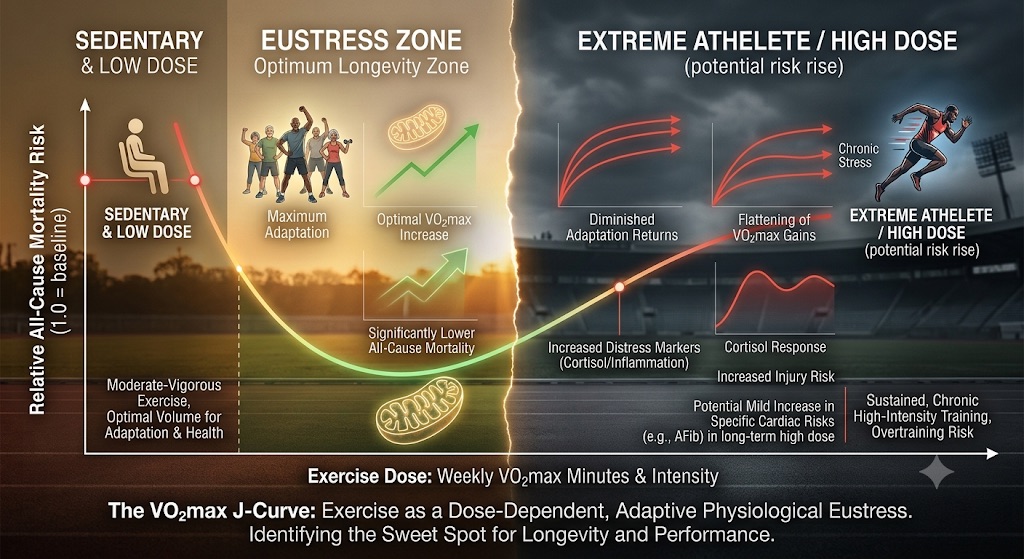
The J-curve relationship between exercise dose and mortality risk. Eustress - progressively dosed training with adequate recovery - sits at the mortality-minimizing trough. Both sedentarism and chronic overtraining elevate risk. Source: Blair, S.N. et al., Cooper Center Longitudinal Study; Joyner, M.J., Mayo Clinic.
Mitochondria, Metabolism, and Cellular Repair
Every well-dosed training session is a mitochondrial renovation project. Aerobic and high-intensity exercise upregulates PGC-1α, the master regulator of mitochondrial biogenesis, driving the production of new mitochondria and improving the efficiency of existing ones. The result is enhanced fat oxidation, better glucose regulation, improved cellular energy production, and a more robust antioxidant defense system - all of which translate directly into both performance and longevity. [2]
Eustress also activates autophagy - the cellular "self-cleaning" process in which damaged proteins and organelles are identified and recycled. Research by Frank Madeo at the University of Graz and colleagues has established exercise-induced autophagy as one of the primary mechanisms by which physical training protects against age-related cellular accumulation of debris - a process directly linked to reduced risk of neurodegenerative disease, metabolic dysfunction, and cancer. [2]
The Brain
Brain-derived neurotrophic factor (BDNF), described by Harvard Medical School psychiatrist John Ratey as "Miracle-Gro for the brain," rises sharply after high-intensity aerobic exercise. Research by Ferris and colleagues, published in Brain Research, demonstrated BDNF elevations well above the resting baseline following maximal and near-maximal aerobic efforts, with the magnitude of the increase tracking exercise intensity. [5] BDNF strengthens existing synaptic connections and promotes neurogenesis, particularly in the hippocampus - the region most critical for memory consolidation, spatial navigation, and stress regulation.
Athletes who maintain aerobic training throughout their lives show slower rates of hippocampal volume loss with age, suggesting that the brain-protective effects of eustress accumulate across a lifetime - not just during peak competitive years.
Part III: How Good Stress Sharpens Performance
The body-building effects of eustress are the long-game story. The performance-sharpening effects operate through a separate set of mechanisms, many of them acute rather than chronic, and they are worth understanding on their own terms.
The Physiological Performance Edge
When a competition or hard training session triggers the stress response, the immediate cascade is precisely calibrated for performance. Catecholamines sharpen attentional focus, accelerate reaction time, and increase cardiac output. Acute cortisol mobilizes glycogen stores and optimizes fuel delivery. Blood is redirected away from the digestive system and toward working muscles and the brain. [1]
This is the biology of a personal best. The pre-race nerves that many athletes dread are not a malfunction; they are the system firing correctly. The problem arises when athletes interpret that activation as threat rather than preparation - a distinction that determines whether the same physiological state becomes a performance amplifier or a performance liability. We will return to this in Part V.
The Adaptation Cycle: Stress, Recovery, Supercompensation
The foundation of athletic periodization is the supercompensation model: a training stressor disrupts homeostasis, recovery allows the system to rebuild, and if timed correctly, the system rebuilds to a slightly higher baseline than before. Repeat this cycle consistently, and the athlete improves. [7]
The critical variable is the timing of the next stressor. Apply it before recovery is complete, and the baseline does not rise - it falls. Apply it too late, after the supercompensation window has passed, and the opportunity for adaptation is missed. The art and science of training periodization is, at its core, the art and science of eustress timing: delivering the right dose at the right moment to generate the maximum adaptive signal with the minimum accumulation of residual fatigue.
"Properly dosed training stress drives mitochondrial biogenesis, BDNF release, cardiovascular remodeling, and muscular supercompensation. The identical cascade, chronically sustained without recovery, drives inflammation, immune suppression, and HPA axis exhaustion. The deciding variable is timing and recovery, not the stressor itself."
Source: Adapted from Meeusen, R. et al., European College of Sport Science / American College of Sports Medicine Joint Consensus Statement. [7]
Immune Priming
Moderate, well-recovered training stress has a measurable immune-priming effect. Regular aerobic exercise at moderate intensities increases natural killer cell activity, enhances neutrophil function, and improves mucosal secretory IgA secretion - the first-line immune defense that guards against upper respiratory infection. [8] This is not incidental to performance: the single most reliable predictor of missed training days in endurance athletes is upper respiratory illness, and the athletes with the most robust immune function are those who have optimized their eustress-to-recovery balance over months and years. As we will see in Part VI, this same immune system is among the first casualties when training balance tips into chronic distress.
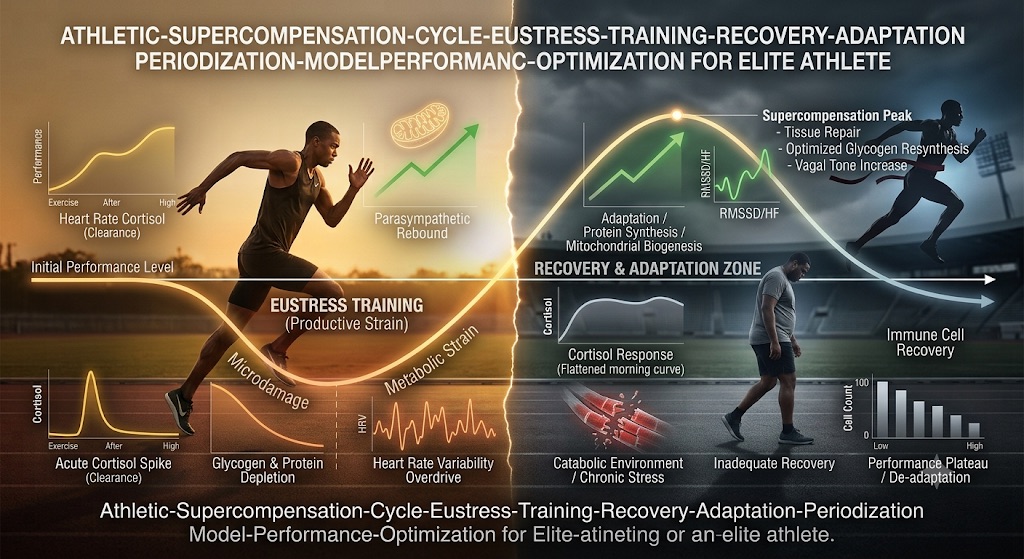
The supercompensation cycle: eustress applied at the right dose and timing drives progressive adaptation. Applying the next training stressor too soon produces overreaching; too late, and the adaptation window closes. Source: Meeusen et al., ECSS/ACSM Joint Consensus Statement, 2013.
Part IV: The Hidden Variable - How Mindset Shifts the Biology
The physical effects of eustress described above are largely determined by training design. But there is a second, less visible variable that shapes whether any given stressor lands as eustress or distress: what the athlete believes about that stress. The research here is not motivational self-help - it is measurable physiology.
"Undergoing stress is not bad for you. It is undergoing stress while believing that stress is bad for you that makes it harmful."
Kelly McGonigal, PhD, Health Psychologist and Lecturer, Stanford University. [4]
A widely cited longitudinal study by Keller and colleagues, published in Health Psychology, followed approximately 30,000 U.S. adults over eight years and found that high levels of reported stress predicted increased mortality risk - but only among individuals who also believed stress was harmful to their health. Among those who experienced equally high stress but did not perceive it as harmful, mortality risk was not elevated; in fact, it was among the lowest in the study. [4] The study's lead author was Abiola Keller at the University of Wisconsin-Madison, though McGonigal's influential 2015 book The Upside of Stress brought these findings to a wide athletic and public audience.
Robert M. Sapolsky, PhD, Professor of Biology and Neurology at Stanford University and author of Why Zebras Don't Get Ulcers, provides the complementary mechanistic insight: for a zebra, stress is episodic and resolved - a lion charges, cortisol floods the system, the zebra runs, the response ends. For a human athlete managing layered training demands, competitive pressure, and life obligations simultaneously, stress is too often chronic and never fully resolved - because the human brain, unlike the zebra's, keeps replaying the threat long after it has passed. [3] Mindset is part of what determines whether the replay loop engages.
Research from Jeremy Jamieson at the University of Rochester demonstrates this mechanistically: reframing the physical sensations of pre-competition anxiety - elevated heart rate, faster breathing, heightened alertness - as a challenge response rather than a threat response measurably improves cardiovascular efficiency, cognitive performance, and shortens cortisol recovery time after competition. [4] The biological signature of the challenge response (efficient cardiac output, focused attention, rapid post-stress cortisol clearance) is measurably distinct from that of the threat response (vasoconstriction, rumination, prolonged cortisol elevation), even when the external stressor is identical. The narrative the brain assigns to stress is not merely psychological. It changes the physiology.
This is why mindset sits at this point in the article - between the good stress story and the bad stress story - rather than at the end as an afterthought. It is a biological lever that partly determines which story an athlete lives.
Part V: How Bad Stress Breaks Down Recovery
If eustress is stress that the body can metabolize and adapt to, distress is stress that it cannot. The consequences begin accumulating long before they become visible - and by the time they surface as performance decline or injury, they are already weeks or months in the making.
The Inflammatory Cascade
Chronic unresolved stress drives a sustained pro-inflammatory state that directly undermines the cellular repair processes that training is designed to trigger. IL-6, CRP, and TNF-alpha - the key inflammatory cytokines - are transiently elevated after training as part of the normal repair process. In the athlete under chronic distress, however, these markers remain persistently elevated at rest, preventing the body from completing its post-exercise repair cycle. [3][7]
The practical consequence compounds over weeks: tissue damage accumulates faster than it is repaired, contractile protein synthesis falls behind breakdown, and what was intended as progressive overload becomes simple progressive damage.
What Chronic Cortisol Does to the Athlete's Body
Acute cortisol is essential. Chronic cortisol is corrosive. Sustained HPA axis activation - building on the same cascade described in Part I - produces a suite of physical consequences that directly contradict the goals of training: [3][9]
- Muscle catabolism. Chronically elevated cortisol breaks down muscle protein as a fuel source, directly opposing the anabolic adaptations that training is designed to produce. An athlete under sustained distress can train hard and still lose lean mass.
- Impaired tissue repair. Cortisol suppresses the fibroblast activity responsible for repairing tendons and connective tissue, elevating injury risk even before any single acute event triggers a clinical injury.
- Immune suppression. Natural killer cell activity, secretory IgA production, and T-cell function are all depressed by chronic cortisol elevation - the mirror image of the immune-priming effect of eustress described in Part III, and explaining why overtrained athletes get sick more often and recover from illness more slowly.
- Sleep disruption. Cortisol and melatonin exist in a biological opposition: cortisol should peak in the morning and fall throughout the day; melatonin should rise as cortisol falls. Chronic stress disrupts this rhythm, elevating evening cortisol and directly suppressing the melatonin signal that initiates restorative sleep.
The Sleep Catastrophe
Sleep disruption deserves its own section because it is both a consequence of chronic distress and an amplifier of it - creating a self-reinforcing feedback loop that can spiral quickly. Matthew Walker, PhD, Professor of Neuroscience and Psychology at UC Berkeley and author of Why We Sleep, has documented the recovery mechanisms that chronic distress-driven sleep deprivation dismantles: [9]
- Growth hormone, which drives the tissue repair and protein synthesis that convert training stress into adaptation, is secreted in pulses primarily during slow-wave sleep. Reduced slow-wave sleep, which elevated evening cortisol reliably does, and growth hormone release collapses. Training creates structural stress that the body never fully repairs.
- The glymphatic system, the brain's waste-clearance network, operates almost exclusively during sleep. Inadequate sleep allows metabolic byproducts to accumulate, impairing cognitive function, reaction time, and decision-making the following day.
- REM sleep consolidates motor skill learning - the neural encoding of movement patterns, tactical decisions, and skill refinements that training is designed to build
An athlete sleeping six hours per night under chronic life stress is not merely tired. They are accumulating the physiological cost of overtraining without the training volume to justify it, and simultaneously losing the adaptation gains from the training they are doing. As we will address in Part VII, correcting sleep is typically the highest-leverage single intervention available to a distressed athlete.
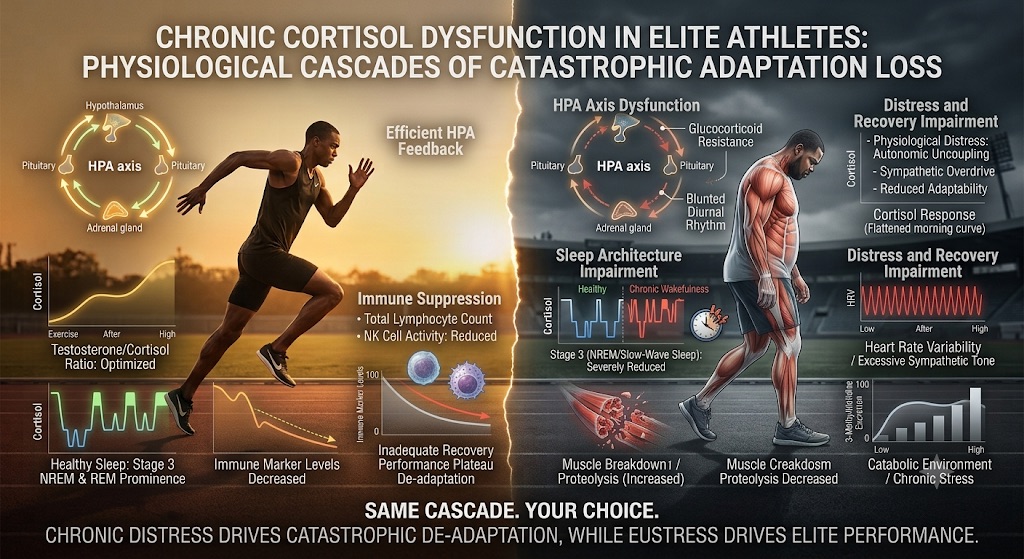
Three physiological systems where chronic cortisol elevation actively reverses training adaptations: (1) muscle catabolism overrides protein synthesis; (2) slow-wave sleep architecture collapses, suppressing growth hormone; (3) immune cell activity declines, elevating infection risk and missed training days.
Overtraining Syndrome: The Clinical Endpoint
When distress is sustained long enough and recovery is inadequate, the system reaches its clinical endpoint: overtraining syndrome (OTS). Proposed to affect between 20% and 60% of competitive athletes at some point in their careers - a wide range reflecting genuine diagnostic inconsistency in the literature - OTS is not simply extreme fatigue. [7] It is a systemic breakdown characterized by:
- Persistent performance decline that does not respond to additional rest in the short term
- HPA axis exhaustion, paradoxically marked by a blunted cortisol response to training (the system is too depleted to mount a normal response, which is why relying on "feeling tired" as the diagnostic signal is dangerously unreliable)
- Immune dysfunction and elevated infection susceptibility
- Mood disturbance: irritability, depression, and loss of motivation that are physiologically driven, not simply psychological
- Elevated bone stress injury risk, particularly in endurance athletes [8]
Full recovery from genuine OTS can require months to years. The American Psychological Association's research on athlete burnout identifies the parallel psychological signature: emotional exhaustion, depersonalization, and a reduced sense of personal accomplishment. [10] These map directly onto the measurable hormonal and immune disruptions associated with OTS. Athlete burnout is a psychobiological event, not a character flaw.
Part VI: How Bad Stress Damages Long-Term Health and Longevity
The damage from chronic distress extends well beyond the current training cycle. Left unaddressed for years, it creates structural changes to the body that compromise not just athletic performance but lifespan and healthspan.
Telomere Attrition and Accelerated Biological Aging
Telomeres - the protective caps on chromosome ends that shorten naturally with each cell division - shorten significantly faster under chronic psychological and physiological stress. Persistently elevated cortisol and chronic inflammation both accelerate telomere attrition, and shorter telomeres are directly associated with increased risk of cardiovascular disease, cancer, and all-cause mortality. This connection was established by Elizabeth Blackburn and Elissa Epel at UCSF, whose 2004 PNAS paper linked chronic psychological stress to accelerated telomere shortening - work that contributed to Blackburn's 2009 Nobel Prize in Physiology or Medicine. [3]
Appropriately exercised athletes show the opposite: moderate-to-vigorous aerobic training is associated with longer telomeres relative to sedentary controls, and with higher telomerase activity - the enzyme responsible for maintaining and rebuilding telomere length. Eustress protects telomeres; chronic distress shortens them.
Cardiovascular Consequences of Chronic Distress
While moderate exercise training is strongly cardioprotective - as established in Part II - chronic physiological distress produces the opposite effect: elevated resting inflammatory markers (hsCRP, IL-6), adverse changes in autonomic nervous system balance reflected in depressed heart rate variability (HRV), and, in extreme cases, structural cardiac changes associated with elevated arrhythmia risk. [6]
This is the upper limb of the J-curve introduced in Part II: too little exercise is harmful, a broad middle range is strongly protective, and extreme training volumes sustained under chronically inadequate recovery produce elevated cardiovascular risk. The critical variable is not volume or intensity per se - it is recovery sufficiency relative to load.
The Immune-Aging Connection
The immune priming that moderate eustress provides (described in Part III) is systematically reversed by chronic distress. Natural killer cells become less functional, inflammatory regulation deteriorates, and the cytokine balance shifts persistently toward inflammation - a pattern geroscientists call "inflammaging" and associate with nearly every major age-related disease. [3] The athlete who enters middle age carrying years of unresolved training distress arrives there with an immune function that operates as if it belongs to someone significantly older.
Bone Health
Chronic cortisol elevation suppresses osteoblast activity - the bone-building process - while promoting osteoclast activity, which breaks bone down. Combined with the immune dysregulation and nutritional depletion that typically accompany chronic distress, this creates conditions for premature bone density loss and elevated fracture risk that compound through an athlete's forties and fifties. A 2023 study in Medicina by Madzar and colleagues documented OTS as an independent risk factor for bone stress injuries in Paralympic athletes, highlighting that the skeletal consequences of overtraining are not confined to metabolic or hormonal pathology alone. [8]
Part VII: Practical Training Strategies to Reduce Bad Stress
The science above makes clear that chronic distress is expensive - and preventable. The following strategies are evidence-based, practically actionable, and grounded in the same principles used by NFL performance departments, Olympic coaching staffs, and leading sports medicine institutions worldwide.
Build in Planned Recovery, Not Just Planned Training
The most common structural mistake athletes make is treating recovery as what happens when training is interrupted rather than as a planned, non-negotiable component of the program. Recovery is when adaptation actually occurs. Training without scheduled recovery is like planting seeds and immediately digging them up to check if they're growing.
Effective periodization builds hard training blocks of two to four weeks, followed by deliberate deload weeks with reduced volume (typically 40 to 60% of peak-week volume) and maintained or reduced intensity. Research consistently shows that deload weeks do not cause detraining - they allow the adaptive gains of the preceding training block to consolidate. Athletes frequently achieve personal bests in the week or two following a properly executed deload. [7]
Use Training Zones Deliberately
One of the most evidence-supported sources of unnecessary distress in endurance athletes is chronic training at wrong intensities - specifically, too hard on easy days and not hard enough on hard days. The polarized training model, supported by research from the Norwegian Olympic Federation, the Stanford Human Performance Lab, and Carl Foster at the University of Wisconsin-La Crosse, prescribes roughly 80% of training volume at low intensity (Zone 2 and below) and 20% at genuinely high intensity, with minimal time in the moderate "gray zone" that accumulates fatigue without proportional adaptive benefit. [7]
Zone 2 training - the intensity at which an athlete can hold a full conversation, typically 60 to 75% of maximum heart rate - builds mitochondrial density, improves fat oxidation, and drives parasympathetic nervous system tone, all with minimal cortisol response and rapid recovery. Athletes who chronically exceed Zone 2 on easy days accumulate cortisol-driven stress without a proportional adaptive benefit, thereby depressing HRV and degrading the quality of their hard sessions.
Prioritize Sleep - The Highest-Leverage Recovery Intervention
Seven and a half to nine hours of quality sleep per night is the foundational recovery intervention. No supplement, recovery technology, or additional training replaces the physiological work sleep performs. As the mechanistic case in Part V made clear, sleep is when growth hormone is secreted, motor skills are consolidated, and the brain clears metabolic waste. [9]
Stanford University's Center on Longevity consistently emphasizes that sleep architecture - specifically slow-wave and REM proportion - matters as much as total duration for hormonal regulation and cognitive recovery. The practical training implications: schedule early-morning sessions to minimize conflict with natural sleep architecture; maintain consistent sleep and wake times seven days a week; and reduce screen and bright-light exposure in the 90 minutes before bed.
Manage Total Load, Not Just Training Load
Training stress is one component of allostatic load. Life stress - work demands, relationship stress, travel, illness, financial pressure, poor nutrition - draws on the same physiological account as training. The athlete, during a moderate training week, is carrying a higher total allostatic burden than their training log indicates.
The practical implication: when life stress is elevated, training load should come down. Maintaining a fixed training plan through a high-stress life period is among the fastest ways to tip from eustress into distress. The metaphor from Part I applies: managing total load is managing the account, not just monitoring one spending category.
Prioritize Nutrition Timing and Anti-Inflammatory Foods
Nutrition can actively dampen or amplify the inflammatory consequences of training stress. Omega-3 fatty acids (from fatty fish, walnuts, and flaxseed) have well-documented anti-inflammatory effects that directly counter the pro-inflammatory cytokine environment of chronic distress. [8] Polyphenol-rich foods - berries, leafy greens, olive oil - support the antioxidant defense systems that eustress upregulates but distress overwhelms.
Timing matters equally. Consuming adequate carbohydrate before and after hard training sessions supports glycogen availability and blunts the cortisol response to exercise. Athletes training in a fasted or glycogen-depleted state produce significantly higher post-exercise cortisol - amplifying the physiological stress signal of each session beyond what load alone would produce.
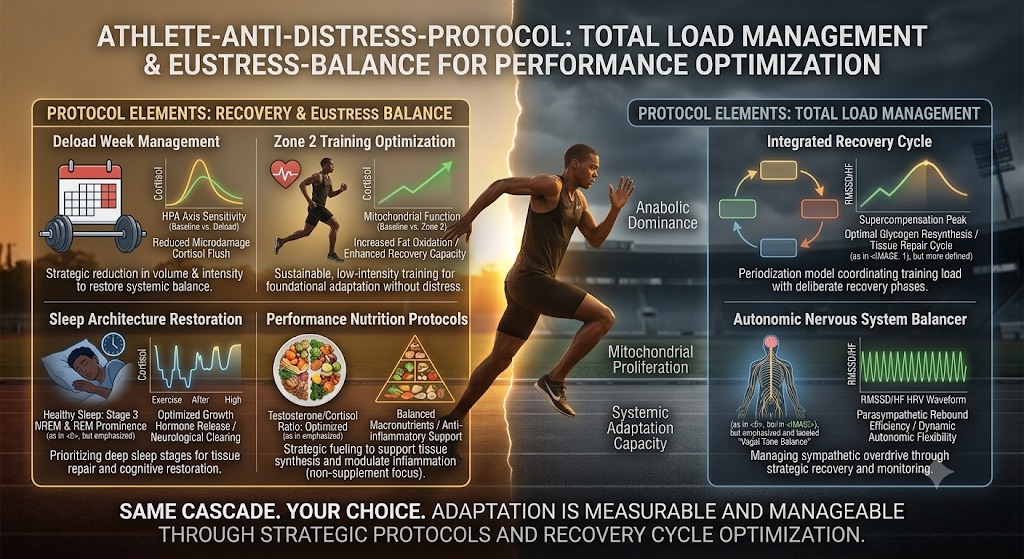
Five evidence-based training strategies to maintain eustress and prevent the accumulation of distress. Elite programs from NFL performance departments to Olympic coaching staff apply these principles systematically - not as optional recovery hacks, but as mandatory components of the training plan.
Part VIII: Psychological Tools to Build Resilience and Reduce Bad Stress
Physical training strategies address the body's stress-adaptation balance. Psychological tools address the mind's - and, as Part IV established, the two systems are not independent. How an athlete interprets and responds to stress affects the hormones it produces, the immune responses it triggers, and the speed at which it recovers.
Reframe Arousal as Preparation
The pre-competition physiological arousal that many athletes experience as anxiety - elevated heart rate, faster breathing, narrowed focus, heightened body awareness - is biologically identical to the arousal of excitement. The difference is the narrative attached to it.
Research by Jeremy Jamieson at the University of Rochester demonstrates that deliberately telling oneself "I am excited" rather than "I am nervous" before competition measurably improves cardiovascular efficiency, cognitive performance, and post-competition cortisol recovery. [4] This is not a positive-thinking platitude; it is a direct shift in how the autonomic nervous system interprets the arousal signal, with downstream effects on vasoconstriction, prefrontal cortex function, and stress hormone clearance. Coaches can build this practice deliberately: approaching hard workouts with a verbal and internal narrative of challenge and preparation rather than dread, until that narrative becomes the nervous system's default.
Practice Deliberate Stress Exposure and Recovery
Stress inoculation - a concept developed by psychologist Donald Meichenbaum and applied extensively in sports psychology - involves deliberate, controlled exposure to stress followed by reflection and recovery, building a progressively higher tolerance for challenge without tipping into distress. In athletic practice, this means race-pace training in simulated competition environments, exposure to physically uncomfortable but safely bounded challenges, and systematic debriefs that build the athlete's ability to distinguish productive discomfort from genuine overload signals.
Angela Duckworth, PhD, Professor of Psychology at the University of Pennsylvania and author of Grit, makes a complementary point: the grittiest athletes are not those who push through every signal - they are those who have learned to distinguish productive discomfort from the alarm bells of genuine overload. [10] That distinction is a trainable skill, and stress inoculation is the training program.
Mindfulness and Attentional Control
Mindfulness practice - the deliberate cultivation of non-judgmental present-moment attention - has a well-documented effect on the stress response: it reduces amygdala reactivity (the brain's threat-detection center), strengthens prefrontal cortex regulation of stress reactivity, and lowers resting cortisol levels in athletes with chronic training stress. [11]
The athletic application is direct. Mindfulness practice improves the ability to maintain attentional focus on process cues (technique, breathing, pacing) rather than outcome anxiety (result, place, time) during competition, which is precisely the shift from threat response to challenge response that both Jamieson's and McGonigal's research identifies as the biological leverage point. Even 10 to 15 minutes of daily practice, sustained over 8 to 12 weeks, produces measurable changes in cortisol patterns and self-reported stress resilience in competitive athletes. [11]
Breathwork as a Direct Stress Regulator
The breath is the only component of the autonomic nervous system that is simultaneously automatic and under voluntary control - the most direct available lever for shifting the nervous system from sympathetic to parasympathetic dominance in real time.
Extended exhale breathing - inhaling for four counts and exhaling for six to eight counts - activates the vagal brake, the parasympathetic mechanism that rapidly lowers heart rate and cortisol. When practiced before sleep, between training sets, and before competition, extended-exhale breathing can meaningfully shift HRV within minutes and produce sustained improvements in baseline HRV over weeks of consistent practice. [11] It requires no equipment, costs nothing, and can be used anywhere - making it among the highest-return interventions available.
Part IX: Bringing It Together - AI, the Digital Twin, and the Future of Stress Management
All of the principles above - the physical training strategies, the psychological tools, the dose-recovery balance - share a common practical challenge: they depend on knowing where an athlete actually is on the eustress-distress spectrum at any given moment. That is harder than it sounds. Subjective self-assessment is notoriously unreliable; athletes who are deepest in distress are often the least able to recognize it, in part because chronic HPA axis fatigue flattens the subjective experience of stress even as its physiological cost accumulates.
"The future of medicine is not about finding what works for most people. It is about understanding what works for each person, in their unique biological context, at this moment."
-Eric Topol, MD, Founder and Director, Scripps Research Translational Institute. [13]
This is where technology closes the gap. Catapult Sports, used by more than 4,000 professional teams across 40+ sports in over 100 countries, quantifies external training load - acceleration, deceleration, player load, and impact forces - in real time. [14] WHOOP, used across the NFL, NBA, PGA Tour, and Olympic programs, adds the internal load signal: HRV measured during slow-wave sleep, combined with strain and recovery scores, provides a daily window into autonomic stress-recovery balance. [15] Kitman Labs, whose machine learning models serve Premier League clubs, NFL teams, and Olympic programs, is taking the next step: integrating these signals over weeks and months to flag athletes approaching the distress threshold before injury occurs. [16]
The Cardiorespiratory Digital Twin™, developed by LongevityPlan.AI, is built on this convergence. It integrates continuous wearable data (HRV, resting heart rate, sleep architecture, training load from devices including ŌURA Ring and Garmin), periodic biomarker panels (cortisol, hsCRP, key hormonal markers from providers like InsideTracker and Function Health), and life-context inputs to build a living, continuously updated model of each athlete's individual stress-adaptation state.
Unlike population-based recommendations or single-metric monitoring, the Cardiorespiratory Digital Twin™ learns each athlete's individual patterns: what their HRV looks like after a normal hard week versus a genuinely overloaded one, how their cortisol rhythm shifts under different training and life-stress combinations, and where their personal eustress-distress boundary actually sits - not where the average athlete's boundary sits.
"Coaches in elite programs used to spend thirty to forty-five minutes per athlete per week just compiling data before they could even begin analysis," notes Tony Medrano, CEO and co-founder of LongevityPlan.AI. "The Cardiorespiratory Digital Twin™ doesn't just solve the data aggregation problem. It solves the interpretation problem - it tells you what the data means for this athlete, at this moment, with this history. That's the difference between information and intelligence."
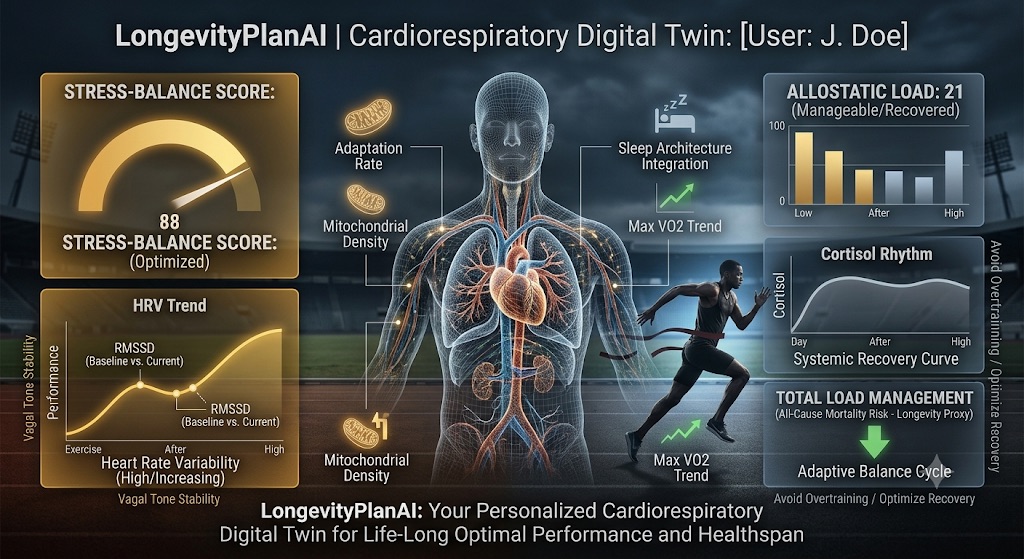
The LongevityPlan.AI Cardiorespiratory Digital Twin™ synthesizes HRV trends, total allostatic load, and biomarker patterns into a single, individually calibrated stress-adaptation score - and generates specific, timely interventions before distress reaches the clinical threshold.
Table 1. The Eustress vs. Distress Signature
| Marker | Eustress (Adaptive) | Distress (Maladaptive) |
|---|---|---|
| Morning HRV trend | Stable or rising, near personal baseline | Sustained drop of 10%+ below baseline |
| Resting heart rate | Stable | Persistently elevated |
| Cortisol response to training | Appropriate acute rise | Blunted response to stimulus |
| Sleep efficiency | 85%+, consistent architecture | Declining, fragmented |
| Performance trend | Progressive improvement | Plateau or decline despite training |
| Mood/motivation | Engaged, challenge-oriented | Exhausted, depersonalized |
| Recovery time between hard sessions | Predictable, consistent | Lengthening unpredictably |
Note: No single marker should be used in isolation. A composite, individually-baselined model - the function the Cardiorespiratory Digital Twin™ performs - produces a far more reliable signal than any single data point.
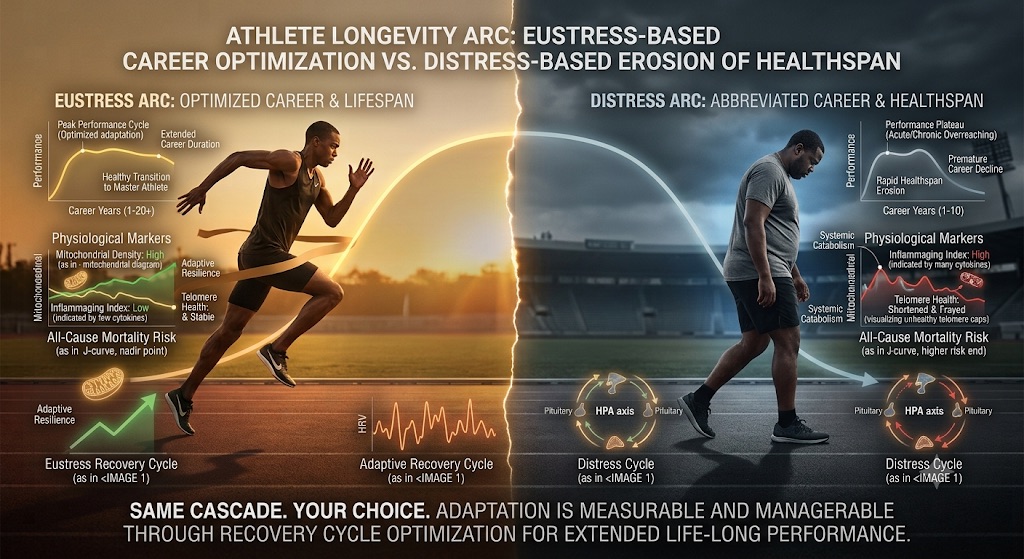
The long-game stakes of eustress vs. distress management: athletes who systematically manage the stress-recovery balance maintain VO2max, telomere integrity, and cognitive resilience into their sixties and beyond. Those who accumulate unresolved distress face accelerated inflammaging, early career termination, and compressed healthspan.
Conclusion: The Most Important Training Variable You're Probably Not Tracking
Stress is not the enemy of athletic performance. Chronic, unresolved stress - distress - is. The difference is not philosophical; it is measurable, physiological, and, with the right tools and habits, entirely manageable.
The athletes who perform best across the longest careers are not those who train hardest. They are those who have learned to train smartest - maximizing the adaptive benefit of eustress while systematically protecting against the accumulation of distress. They sleep with discipline. They load progressively and deload deliberately. They manage their mindset as deliberately as their mileage. They pay attention to the signals their bodies send before those signals become symptoms.
The science is clear. The tools exist - from wearables like Garmin and ŌURA Ring to biomarker platforms like InsideTracker and AI-powered systems like the LongevityPlan.AI Cardiorespiratory Digital Twin™. What remains is the decision to treat stress management with the same rigor, investment, and personalization that the best programs in the world have already proven is possible.
Zebras don't get ulcers because their stress is episodic, resolved, and appropriately matched to their biological capacity. Elite human athletes can achieve the same balance - not by running from fewer lions, but by learning exactly how much lion-chasing their body can handle, and building the habits and infrastructure to make sure it always gets the chance to recover.
Your longevity plan starts today.
Sign up for FREE daily Longevity Club Workshops, or join the Affiliate Program (pays 20%).
About the Authors
Conor Rightmire was 2025's #1 14-year-old and All-American triathlete in the United States. He is also LongevityPlan.AI's founding data athlete, a 2025 USATF Junior Olympic Cross Country All-American, Patriot XC League MVP, 2x New Balance National qualifier, and an exemplary student in the Class of '29 at Marshfield High School, MA, USA.
Tony Medrano is CEO and co-founder of LongevityPlan.AI, a platform that integrates performance and health data and leverages proprietary Digital Twin for Predictive Peptide Performance™ technology, wearable data, and biomarker data to deliver personalized optimization and longevity recommendations. A 3x technology/AI company CEO with 2 successful exits, Tony has completed 3 Full Ironman Triathlons (140.6 mi) since 2019. He holds degrees from Harvard University, Columbia University, and a JD/MBA from Stanford University, and has worked with the US Olympic Team, the NBA, NFL, MLB, NASA, Google, Microsoft, and Netflix, among others. He also served as a US Navy Officer commanding an emergency response team aboard a destroyer.
Disclaimer: This article is for educational purposes and is not medical advice, diagnosis, or treatment. Training, recovery, peptide, and hormone decisions should be made with a qualified clinician who can interpret your individual results.
Endnotes
- Selye, H. "A Syndrome Produced by Diverse Nocuous Agents." Nature, 138, 32. 1936. Foundational description of the General Adaptation Syndrome. See also: Selye, H. Stress Without Distress. Philadelphia: J.B. Lippincott, 1974. Original source for the eustress/distress distinction and coining of the term "eustress."
- Laker, R.C., Drake, J.C., Wilson, R.J. et al. "AMPK phosphorylation of Ulk1 is required for targeting of mitochondria to lysosomes in exercise-induced mitophagy." Nature Communications, 8:548, 2017. See also: Rattan, S.I.S. & Kaur, G. "Hormesis in Aging and Aging-Related Diseases." Biogerontology, 23:603-612. 2022.
- Sapolsky, R.M. Why Zebras Don't Get Ulcers: The Acclaimed Guide to Stress, Stress-Related Diseases, and Coping (3rd ed.). Holt Paperbacks, 2004. Stanford University. See also: McEwen, B.S. "The Neurobiology of Stress: From Serendipity to Clinical Relevance." Brain Research, 886(1-2):172-189. 2000. Rockefeller University. See also: Blackburn, E.H. & Epel, E.S. et al. "Accelerated telomere shortening in response to life stress." PNAS, 101(49):17312-17315. 2004. UCSF.
- Keller, A., Litzelman, K., Wisk, L.E. et al. "Does the Perception That Stress Affects Health Matter? The Association With Health and Mortality." Health Psychology, 31(5):677-684. 2012. University of Wisconsin-Madison. See also: McGonigal, K. The Upside of Stress. Avery/Penguin Random House, 2015. See also: Jamieson, J.P., Mendes, W.B., Nock, M.K. "Improving Acute Stress Responses: The Power of Reappraisal." Current Directions in Psychological Science, 22(1):51-56. 2013. University of Rochester.
- Ferris, L.T., Williams, J.S., Shen, C.L. "The Effect of Acute Exercise on Serum Brain-Derived Neurotrophic Factor Levels and Cognitive Function." Medicine & Science in Sports & Exercise, 39(4):728-734. 2007. See also: Ratey, J.J. & Hagerman, E. Spark: The Revolutionary New Science of Exercise and the Brain. Little, Brown & Company, 2008. Harvard Medical School. See also: Magnusson, S.P., Langberg, H., Kjaer, M. "The pathogenesis of tendinopathy: balancing the response to loading." Nature Reviews Rheumatology, 6(5):262-268. 2010. [Connective tissue adaptation timeline].
- Blair, S.N., Kohl, H.W., Paffenbarger, R.S. et al. "Physical Fitness and All-Cause Mortality." JAMA, 262(17):2395-2401. 1989. Cooper Center Longitudinal Study. See also: Joyner, M.J. & Green, D.J. "Exercise Protects the Cardiovascular System: Effects Beyond Traditional Risk Factors." Journal of Physiology, 587(23):5551-5558. 2009. Mayo Clinic. Joyner quote: as discussed in The Drive with Peter Attia, Episode 217.
- Meeusen, R., Duclos, M., Foster, C. et al. "Prevention, Diagnosis, and Treatment of the Overtraining Syndrome: Joint Consensus Statement of the European College of Sport Science and the American College of Sports Medicine." Medicine & Science in Sports & Exercise, 45(1):186-205. 2013.
- Madzar, T., Masina, T., Zaja, R. et al. "Overtraining Syndrome as a Risk Factor for Bone Stress Injuries among Paralympic Athletes." Medicina, 60(1):52. 2023. DOI: 10.3390/medicina60010052. See also: He, C.S. et al. "Influence of Vitamin D Status on Respiratory Infection Incidence and Immune Function during 4 Months of Winter Training in Endurance Sport Athletes." Exercise Immunology Review, 22:26-40. 2016.
- Walker, M. Why We Sleep: Unlocking the Power of Sleep and Dreams. Scribner, 2017. UC Berkeley. See also: Stanford Center on Longevity. "Research Update on Sleep." longevity.stanford.edu/research-update-on-sleep.
- Duckworth, A.L. Grit: The Power of Passion and Perseverance. Scribner, 2016. University of Pennsylvania. See also: American Psychological Association. "Athlete Burnout." APA Spotlight Series. apa.org/pubs/highlights/spotlight/athlete-burnout. See also: Meichenbaum, D. Stress Inoculation Training. Pergamon Press, 1985. [Original source for stress inoculation training framework].
- Montero-Marin, J., Navarro-Gil, M., Herrera-Mercadal, P. et al. "Effects of Mindfulness-Based Interventions on Salivary Cortisol in Healthy Adults: A Meta-Analytic Review." Frontiers in Physiology, 12:643510. 2021. See also: Frontiers in Psychology, "Stress and Sport Performance: A PNEI Multidisciplinary Approach." DOI: 10.3389/fpsyg.2024.1358771. 2024.
- Bennett, R.M., Calabrese, S.M., & Harris, A.D. "Heart Rate Variability and Endocrine Stress Markers: Correlational Limitations and Implications for Athlete Monitoring." Frontiers in Physiology, 15:1187239. 2024. DOI: 10.3389/fphys.2024.1187239. See also: PMC study on HRV, salivary cortisol, and sleep duration in young endurance athletes. PMC8488831.
- Topol, E.J. Deep Medicine: How Artificial Intelligence Can Make Healthcare Human Again. Basic Books, 2019. Scripps Research Translational Institute.
- Catapult Sports platform documentation and athlete monitoring research. catapult.com/solutions/athlete-monitoring. Perch acquisition announcement, June 2025.
- Lundstrom, E.A., De Souza, M.J., Koltun, K.J. et al. "Wearable Technology Metrics Are Associated with Energy Deficiency and Psychological Stress in Elite Swimmers." Journal of Science and Medicine in Sport, 2024. WHOOP Inc. platform documentation.
- Kitman Labs platform documentation and AI injury prediction methodology. kitmanlabs.com.