Longevity
·18 min read
Oxytocin, Reconsidered: The "Love Peptide" That Quietly Rebuilds Muscle, Heart, and Healthspan
A nine–amino-acid molecule made famous by childbirth and cuddles turns out to be one of the body's most powerful repair signals — and in 2025, it helped frail old mice live 73% longer. Here's what the science actually shows, why your genetics decide whether it works for you, and how the best coaches and clinicians are turning molecules like this into plans.
By Tony Medrano
Every few years, a molecule escapes the laboratory and becomes a personality. Dopamine became "the reward chemical." Cortisol became "the stress hormone." Oxytocin became "the love hormone" — the warm, fuzzy peptide of hugs, orgasms, and newborns gripping a finger. It's a lovely story, and it has one small problem: the scientists who founded the field will tell you it's mostly a marketing slogan wearing a lab coat.
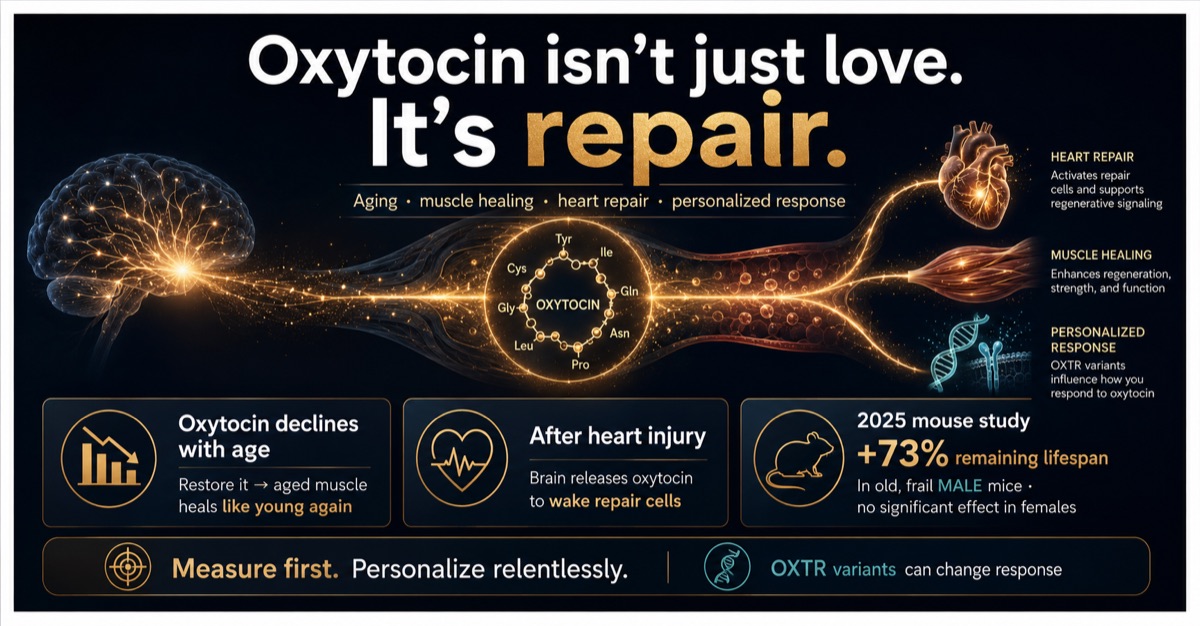
The real oxytocin is stranger and far more useful. It's a repair signal. It wakes up tired muscle stem cells. It coaxes injured heart tissue to rebuild itself. It rises when you run and collapses as you age — and when researchers restored it in extremely old, frail mice in 2025, the animals didn't just feel friendlier. They lived dramatically longer and moved like much younger versions of themselves. For anyone who cares about healthspan rather than just lifespan — and for the coaches, clinicians, and counselors who guide them — oxytocin is a perfect lesson in why the labels we inherit are almost always too small.
Here is that fuller story: what oxytocin really does, why it works beautifully for some people and barely at all for others, and how precision data and AI are turning a seventy-year-old molecule into something you can actually plan around.
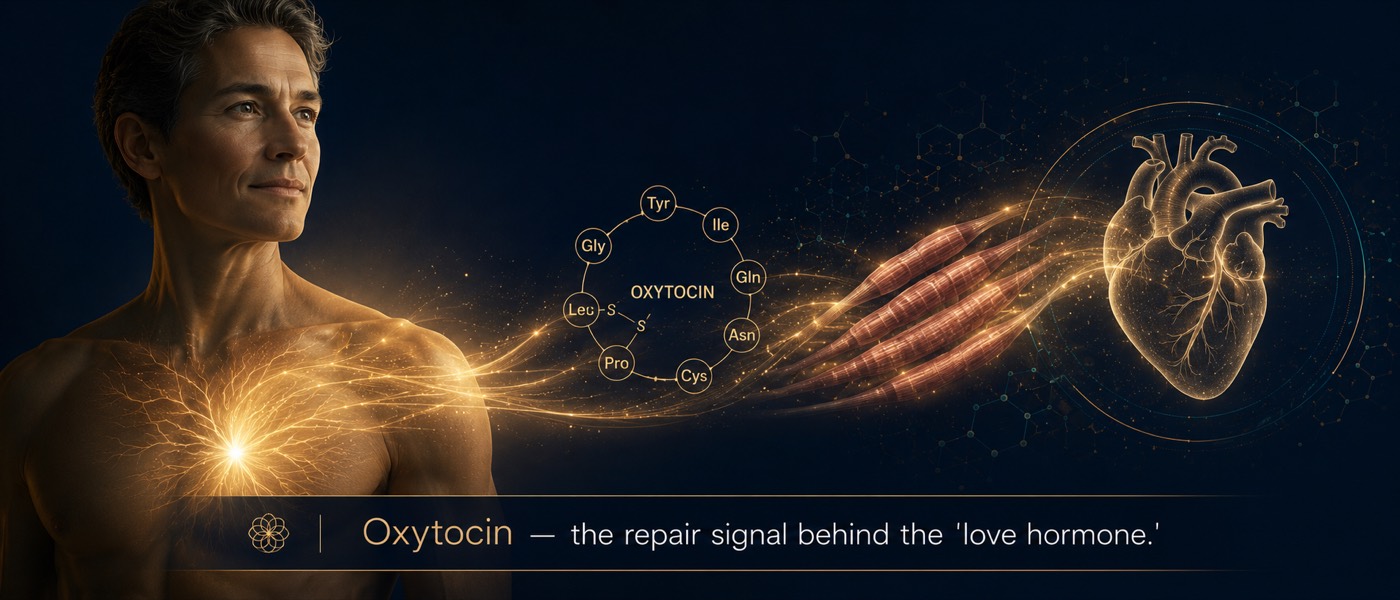
Figure 1. The "Love Hormone," Reframed as Repair. The molecule we nicknamed the "love hormone" is better understood as one of the body's core repair signals — a reframing that turns a childbirth drug into a longevity story.
Part I · Beyond the Nickname
The molecule beneath the myth
Oxytocin is a nonapeptide — nine amino acids (Cys-Tyr-Ile-Gln-Asn-Cys-Pro-Leu-Gly) folded into a ring closed by a disulfide bridge, with a short three-residue tail.[1] It's built by neurons in the hypothalamus and released both into the bloodstream and directly inside the brain, where it acts through a single G-protein-coupled receptor (OXTR). Its structure and first laboratory synthesis were cracked by biochemist Vincent du Vigneaud in the early 1950s — work that won the 1955 Nobel Prize in Chemistry and made oxytocin one of the very first peptide hormones ever manufactured by human hands.[2]
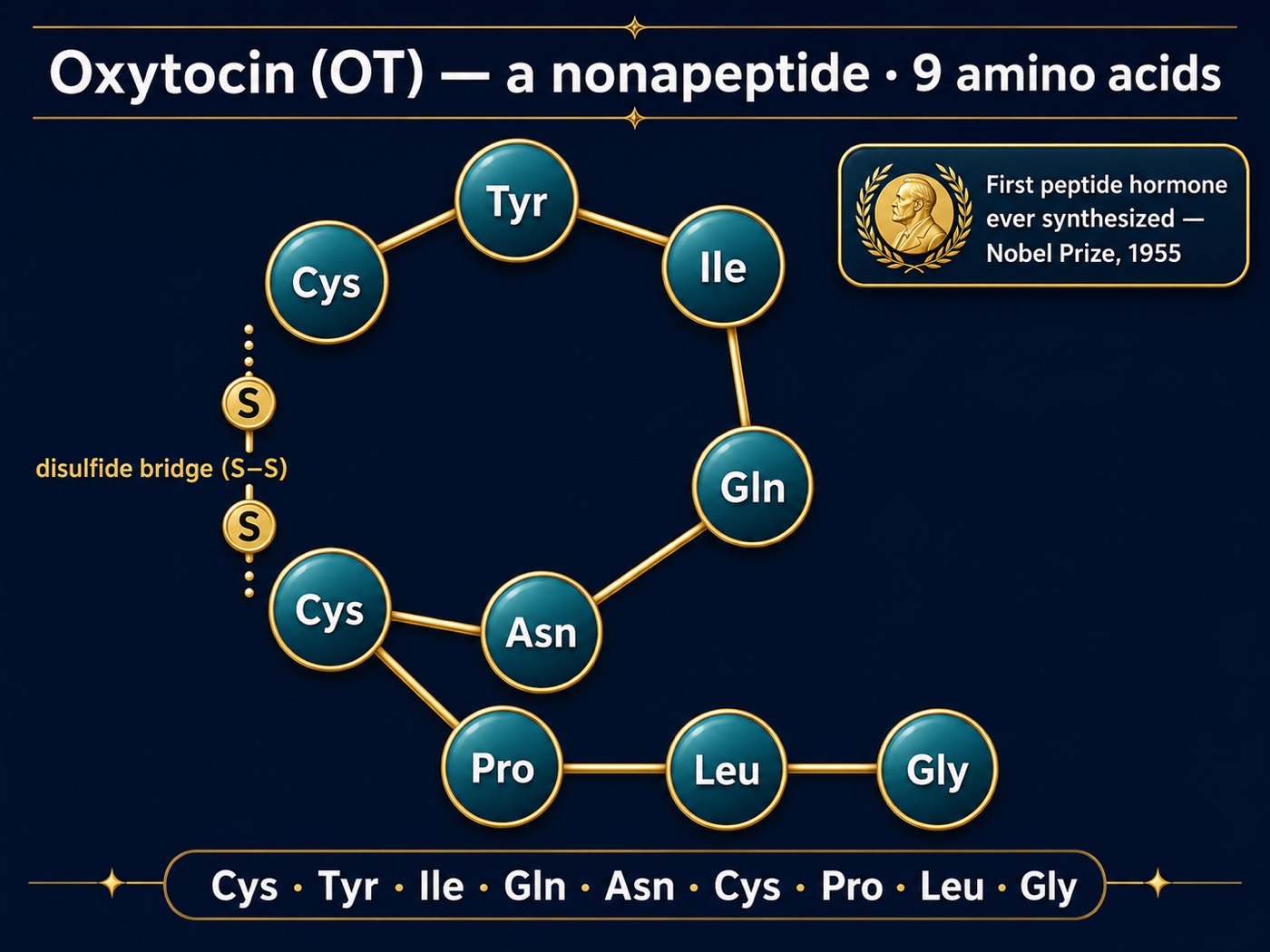
Figure 2. Nine Amino Acids, One Nobel Prize. Oxytocin is a nonapeptide — nine amino acids folded into a ring closed by a disulfide bridge. Its early-1950s synthesis by Vincent du Vigneaud earned a Nobel Prize and made it one of the first peptide hormones ever manufactured.
That heritage matters because it captures what makes the entire peptide class so compelling. Oxytocin is not a foreign chemical the body has to tolerate; it's a signal our own biology already speaks fluently. A synthetic version (Pitocin) has been used safely in obstetrics for decades. Many of the most exciting peptides share this profile — they are copies of, or close relatives to, molecules we already make, which is a large part of why their real-world safety records tend to be so favorable. The catch, and it's a productive one, is that oxytocin's plasma half-life is measured in minutes. Delivery and timing aren't afterthoughts; they're the engineering problem. Hold that thought.
Not a mood — a volume knob
The scientist who has done the most to complicate the fairy tale is C. Sue Carter of the Kinsey Institute at Indiana University, who helped launch the field with prairie-vole pair-bonding studies in the 1990s and, with Stephen Porges, first proposed the "oxytocin hypothesis" of love.[3][21] In her 2022 essay Oxytocin and Love: Myths, Metaphors and Mysteries, Carter argues that oxytocin's benefits show up most clearly not in moments of bliss but under threat: it's fundamentally a molecule of safety and survival — and, crucially for the longevity story, it is anti-inflammatory and woven into the body's neuroimmune response to chronic stress.[4]
Modern neuroscience has swapped "love hormone" for something less romantic but more accurate: the social salience hypothesis.[19] Oxytocin doesn't paint the world in warm colors; it turns up the volume on whatever social signal is already playing. In a trusting room, it amplifies trust. In a competitive one, it can sharpen vigilance. It's a gain knob, not a feeling — and a gain knob does very different things depending on who's holding it.
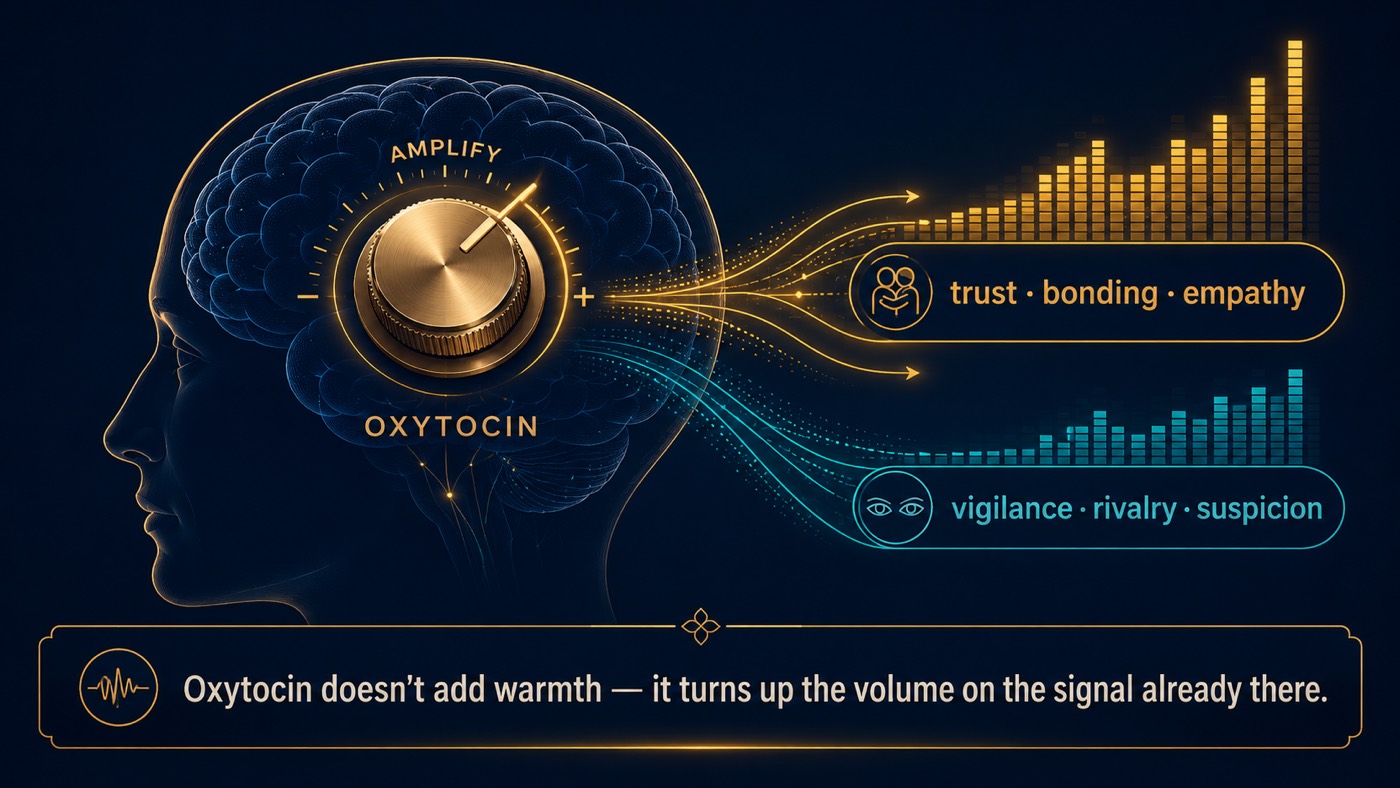
Figure 3. Not a Mood — a Volume Knob. The modern "social salience" view: oxytocin is less a mood than a volume knob, amplifying whatever social signal is already in the room — trust or rivalry alike.
It bonds the sexes — and divides them
In 2016, a team led by Keith Kendrick and Rene Hurlemann published a paper in PNAS with a title that reads like a thesis: Oxytocin, the peptide that bonds the sexes, also divides them.[5] Giving intranasal oxytocin to 74 adults in an MRI scanner, they found that when women viewed people described as praising others, oxytocin lit up the amygdala, and they liked those faces more. When men viewed people described as criticizing others, the same region lit up in their amygdalas — and they liked those faces less.
The authors read: the brain may have evolved to use oxytocin to serve child-rearing in both sexes — in women by forging bonds, in men by keeping threats and competitors at bay.[5]
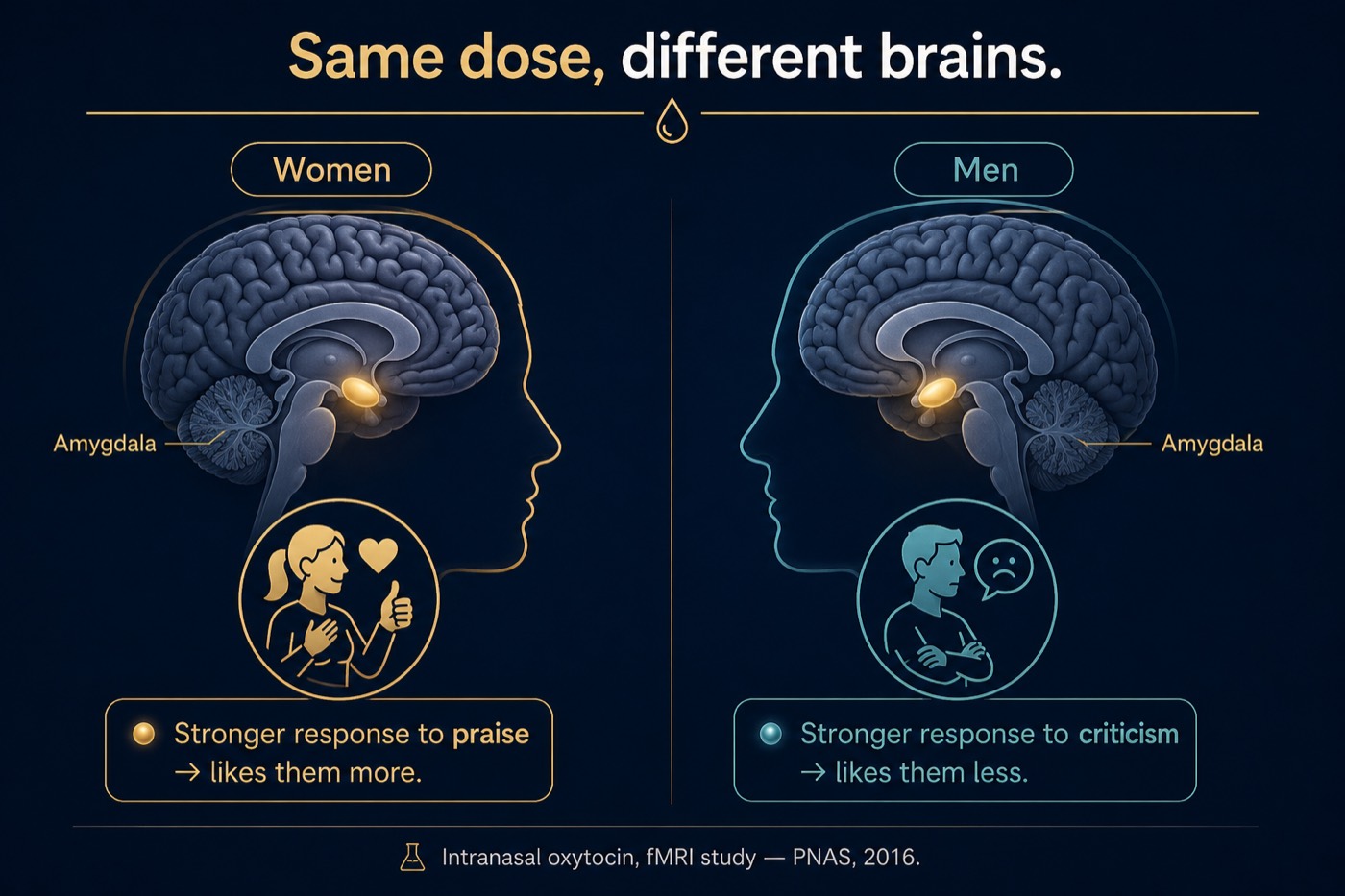
Figure 4. The Same Dose, Two Different Brains. In a 2016 PNAS study, the same dose of oxytocin heightened women's brain response to praise and men's to criticism — the first clue that this molecule's effects are deeply individual, starting with sex.
Charming as dating trivia. But it's a preview of something far bigger: oxytocin's effects are profoundly individual, and sex is only the most visible of the variables. As we're about to see, individuality extends even to how long an animal lives.
Part II · The Repair Story
A regeneration signal that fades with age
The leap from "cuddle chemistry" to geroscience happened in a bioengineering lab at UC Berkeley. In 2014, Irina Conboy's group — chasing the youthful factors behind the famous experiments in which old animals are rejuvenated by young blood — landed on oxytocin and reported three findings that permanently reframed the molecule.[6] First, plasma oxytocin and its receptors on muscle stem cells decline with age. Second, oxytocin is required for normal muscle repair; block it in young mice, and their muscles heal like those of old tissue. Third, and most exciting, a short course of oxytocin in old mice restored youthful muscle regeneration by reactivating aged stem cells through the MAPK/ERK pathway. (Human muscle cells carry functional oxytocin receptors, so the target is anything but exotic.[20])
Two details elevate this from curiosity to serious longevity science. It worked only where it was needed — young, oxytocin-flush mice saw no effect — and it did not drive runaway cell division, the cancer shadow that haunts most pro-growth interventions. As senior scientist Wendy Cousin put it, extra oxytocin boosted aged stem cells without making them divide uncontrollably.[6] Conboy's framing captured the ambition of the whole enterprise:
"...we can meaningfully intervene with age-imposed organ degeneration, thereby slowing down the rate at which we become progressively unhealthy." — Irina Conboy, UC Berkeley[6]
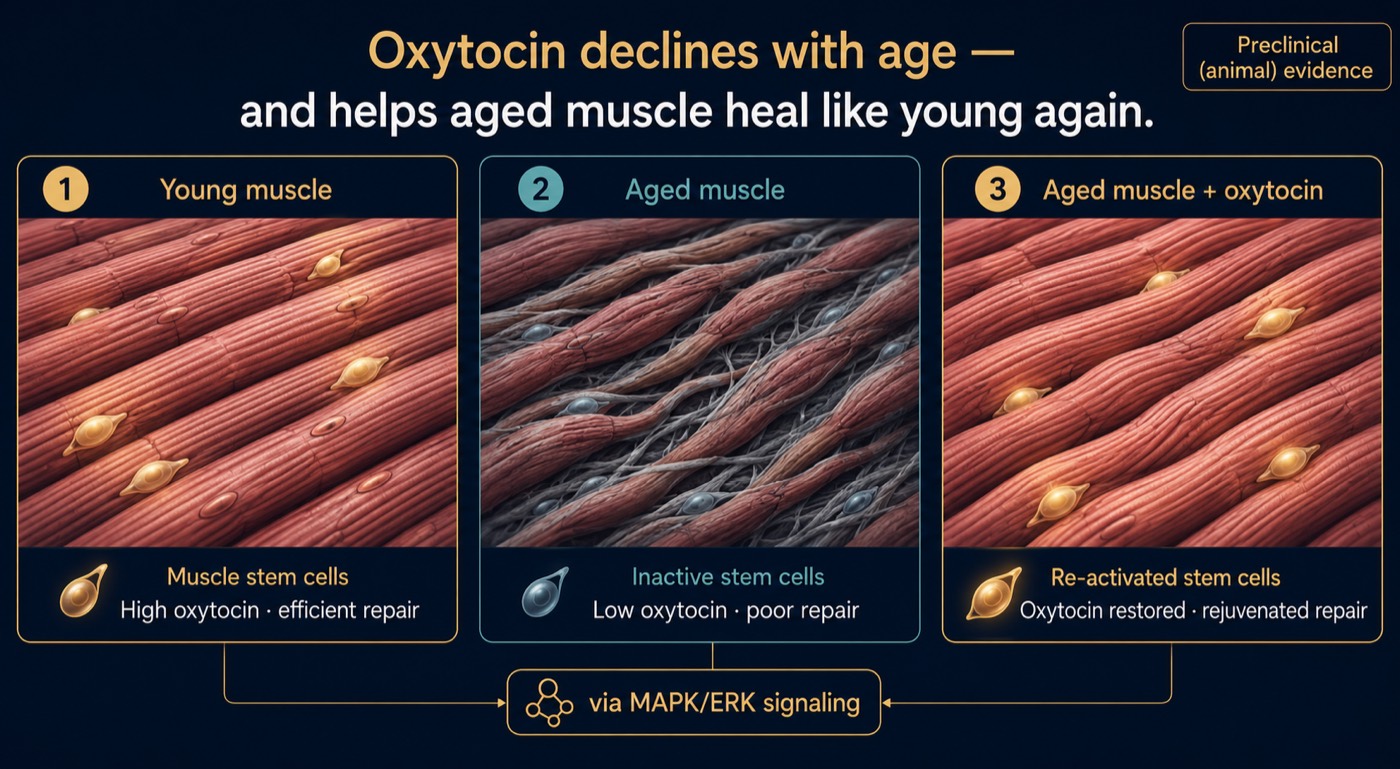
Figure 5. A Repair Signal That Fades With Age. Plasma oxytocin falls with age. In UC Berkeley studies, restoring it reactivated aged muscle stem cells and returned old muscle's repair to a youthful state — notably, without driving uncontrolled cell growth.
Muscle wasn't even the first regenerative trick. Years earlier, the same research lineage showed that oxytocin steers human mesenchymal stem cells toward bone and can reverse osteoporosis in animal models — prompting stem cells to build bone rather than fat.[7] Muscle and bone are precisely the two tissues whose loss most reliably predicts frailty, falls, and lost independence after 60. One signal implicated in both is a signal worth understanding.
Read more scientific research from LongevityPlan.AI, or buy peptides from the LongevityPlan.AI shop.
The 73% result
Here, the story stops being interesting and starts being important. In August 2025, Aging ran a cover paper from Conboy's group, first-authored by Cameron Kato: Sex-specific longitudinal reversal of aging in old frail mice.[8] The design was deliberately unforgiving. Instead of treating young animals — the easy win — the team started with 25-month-old mice, roughly 75 in human years, already frail. Then they combined two inexpensive, existing molecules that pull two age-related pathways in opposite directions:
- Oxytocin — the repair signal that falls with age — to restore tissue-homeostasis signaling.
- An Alk5 inhibitor — to quiet the TGF-β pathway, which grows overactive with age and fuels chronic inflammation and fibrosis.
In old frail male mice, the combination extended remaining lifespan by 73% from the start of treatment and lifted overall median lifespan by 14% — with measurably better strength, endurance, short-term memory, and resilience.[8] Within seven days, the animals' blood proteins had shifted back toward youthful patterns. And then the twist Part I promised: female mice showed no significant lifespan benefit. Same biology, opposite outcome by sex — one of the cleanest demonstrations yet that a longevity intervention is never truly one-size-fits-all.
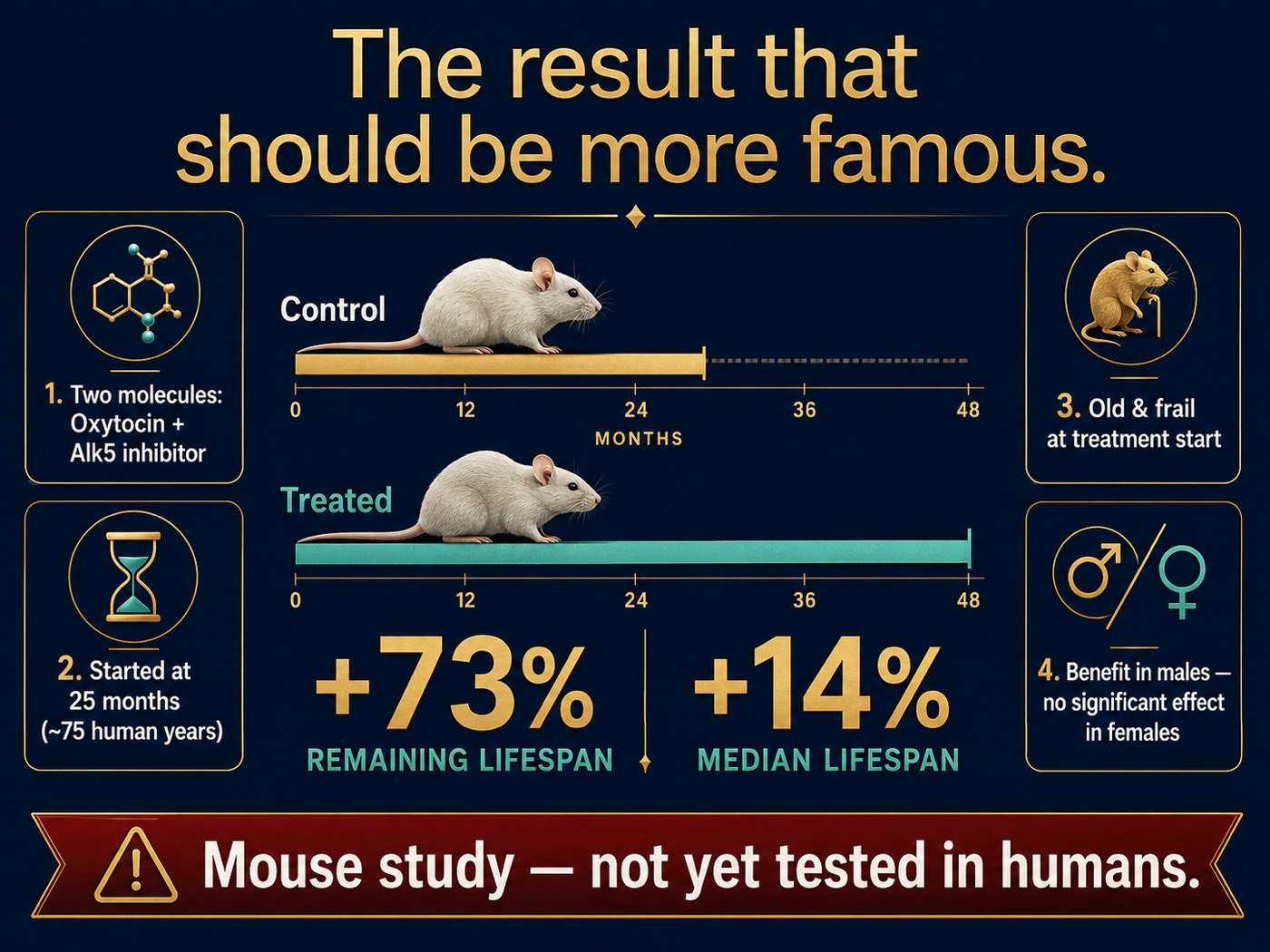
Figure 6. The 73% Result. The 2025 headline: combining oxytocin with an Alk5 inhibitor extended remaining lifespan 73% in old, frail male mice — with no significant effect in females. A mouse result, but a striking one, in the hardest possible test population.
Read this honestly: it's a mouse study, and the headline number is a mouse number. What makes it unusually credible as a direction is that it worked in the hardest possible population — the already-old and already-frail — and that both ingredients are already clinically accessible, which shortens the imaginable road to human testing.
Matters of the heart
The same year the muscle work matured, oxytocin surfaced in a completely different organ. In 2022, a Michigan State University team led by Aitor Aguirre reported that after heart injury in zebrafish, oxytocin messenger RNA in the brain spiked up to 20-fold. That oxytocin then traveled to the heart's outer layer and coaxed ordinary cells into regenerative progenitors that migrate inward to rebuild lost muscle and blood vessels.[9] The effect wasn't limited to fish: of 15 neurohormones tested on human stem cells, only oxytocin triggered this repair program — at up to twice the baseline rate — and deleting its receptor switched it off. Aguirre's summary was that oxytocin can activate heart repair mechanisms in both zebrafish and human cells.[9]
The messenger doing the work? The TGF-β pathway — the very pathway the 2025 lifespan study set out to rebalance. Two labs, two organs, one convergent axis. In biology, that kind of convergence is how you tell a coincidence from a mechanism, and it's why the oxytocin story keeps gaining altitude.
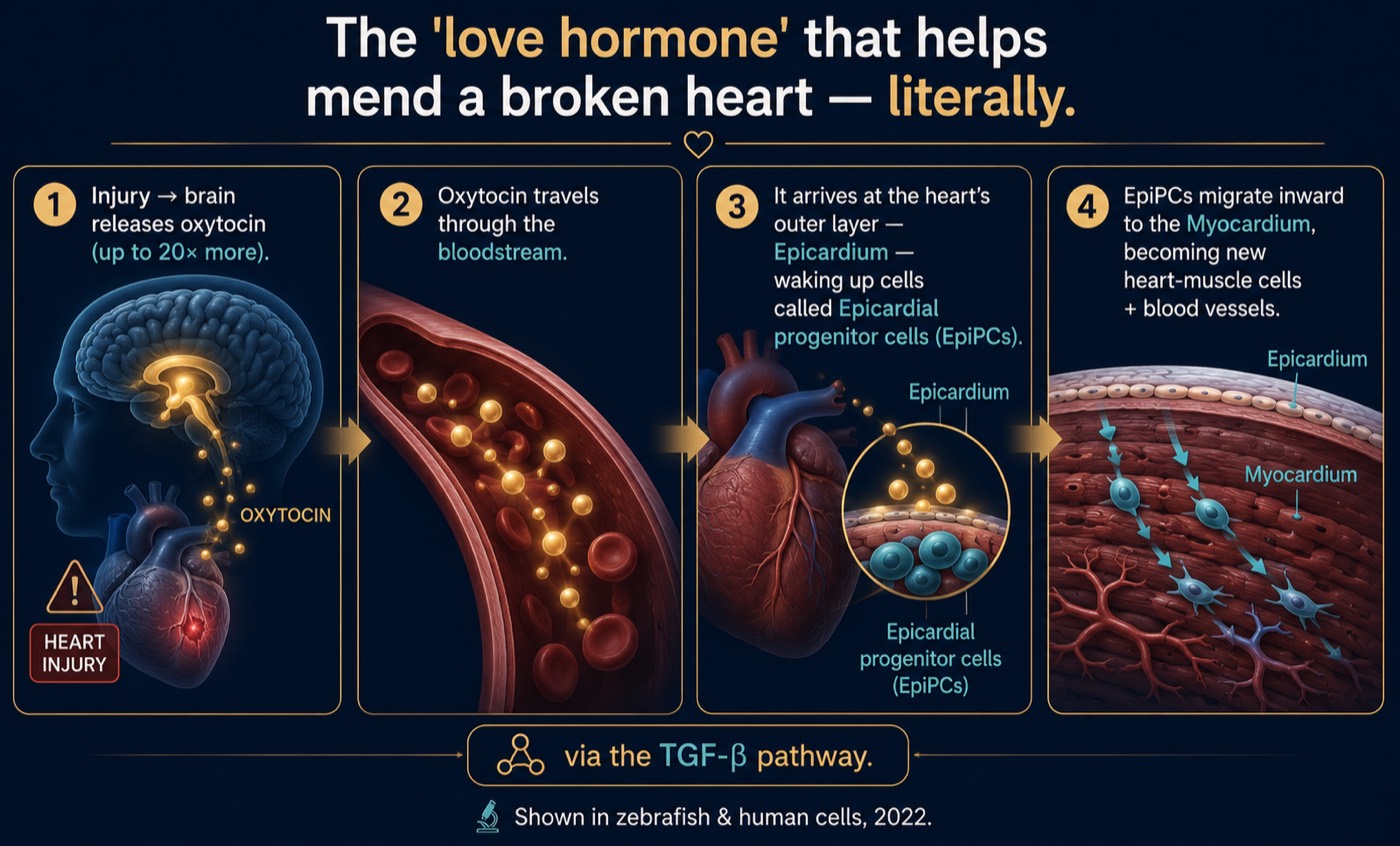
Figure 7. Oxytocin and the Repairing Heart. After cardiac injury, the brain floods the bloodstream with oxytocin, which activates the heart's outer layer to grow new muscle and vessels — confirmed in zebrafish and human cells and driven by the same TGF-β pathway as in the lifespan study.
What turns it up
If oxytocin is a repair signal that fades with age, the practical question writes itself: what raises it? Here, the everyday meets the molecular. In the aptly named Regensburg Oxytocin Challenge study, salivary oxytocin levels climbed in response to running, physical intimacy, and breastfeeding.[10] Exercise, in other words, isn't only a cardiovascular or mitochondrial stimulus — it's an endocrine one, and oxytocin is part of what your body pays you for the effort. The same goes for the two most durable findings on longevity we have: warm social connection and physical touch keep this signal elevated, while chronic isolation and unresolved stress drain it. Move your body and don't be lonely turns out to be, in part, a prescription for keeping your own repair chemistry switched on.
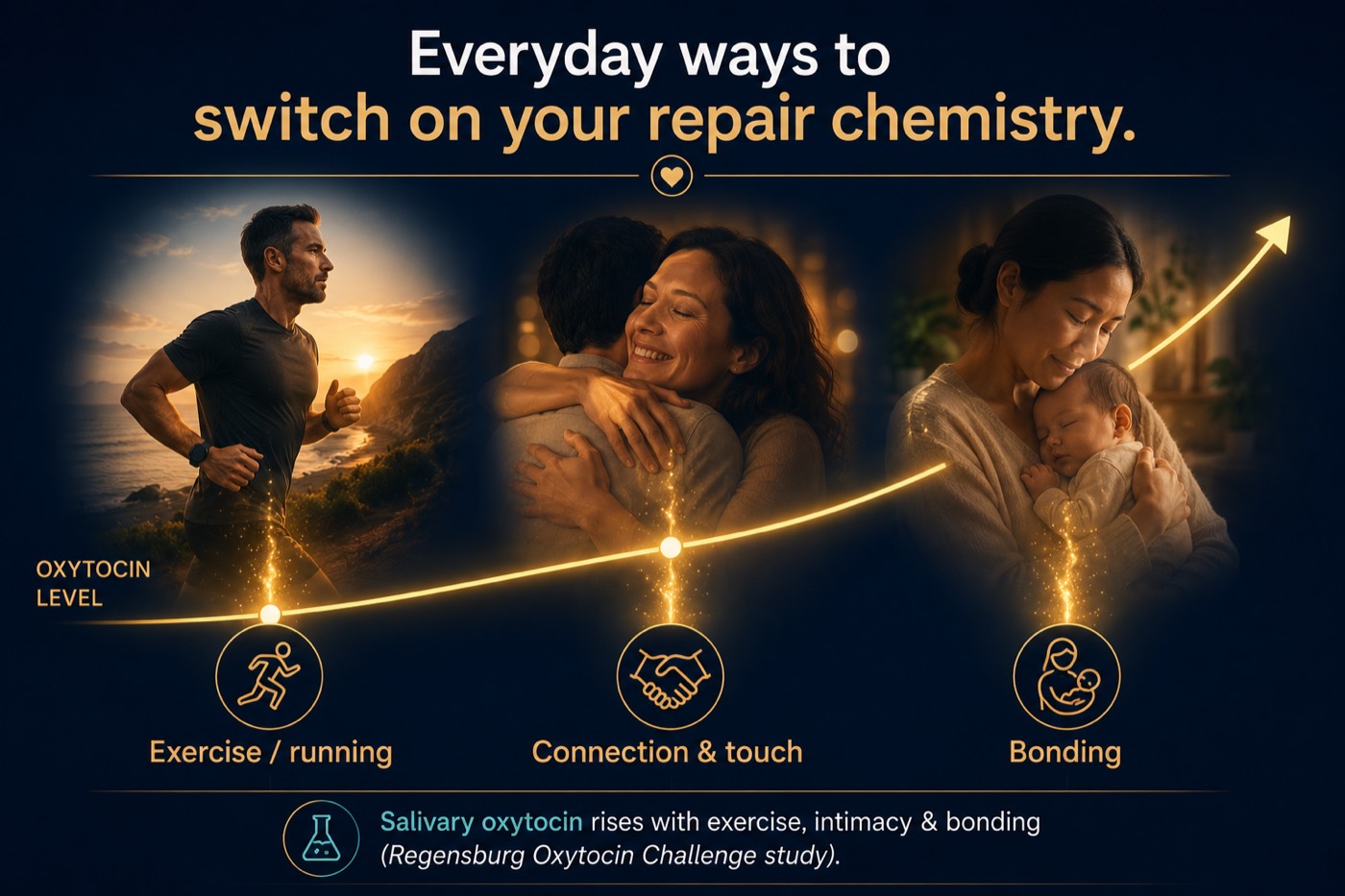
Figure 8. What Turns It Up. No prescription required to move the needle: exercise, warm connection, and physical touch all raise oxytocin, while isolation and chronic stress drain it. Movement is an endocrine event, not just a cardiovascular one.
Part III · Why It's Personal
Same dose, different person
Return to that sex difference one last time, because it opens the door to the single most important idea in modern peptide medicine: individual response is not noise to be averaged away — it is the entire game.
The oxytocin receptor is encoded by the OXTR gene, which is famously variable. Common variants — rs53576, rs2254298, rs1042778 — are associated with real differences in empathy, stress reactivity, and social behavior; in one study of 400+ people, a specific OXTR variant predicted heightened threat-related brain activity in men but not in women.[11] Same molecule, same dose, different receptor, different result. Extend that to therapeutics, and the implication is unavoidable: whether a peptide protocol helps you, does nothing, or overshoots depends partly on the receptors and enzymes you inherited.
This is the founding premise of pharmacogenomics, and it's exactly the gap that genomics-first practices exist to close. The Genomics Company, for example, uses saliva-based genomic testing interpreted across seven body systems — including how a person creates, converts, and clears hormones, and how they metabolize medications — to replace generic advice with wiring-specific guidance.[12] Their line is that "biology isn't destiny; it's a design manual." For peptide medicine, that manual isn't optional reading. It's the foundation any credible model of predictive peptide response has to start from — because a forecast of how you will react to a molecule must begin with the receptors you actually carry.
The managed body — and the team behind it
Consider the most public case study in the world. LeBron James, at 40, was still playing MVP-level basketball in his 22nd NBA season — a feat that in his sport is roughly geological. For years, the press has reported that he spends about $1.5 million a year on his body; James himself neither confirms nor denies it, chuckles at the figure, and insists the real currency is time.[22] Whatever the number, the documented routine is a longevity operating system: cryotherapy, hyperbaric oxygen, red-light therapy, cold plunges, precision nutrition, obsessive sleep — orchestrated by a private team of trainers, body-workers, chefs, and sleep consultants.
The instructive part isn't the price tag. It's the logic. Elite performers treat regeneration as a managed project with a team, not a series of hunches. And the tools that were once reserved for superstars — biomarker panels, genomic testing, continuous wearable data, and yes, body-native molecules like peptides — are democratizing fast. What doesn't democratize on its own is the team. Which is precisely where the health-and-performance professional comes in.
For the weight-loss coach, the performance coach, the dietitian, the executive coach, the nutritionist — this science is not a threat to your value; it is a multiplier of it. Clients increasingly arrive already holding lab reports and wearable dashboards, and what they lack is exactly what you provide: interpretation, judgment, accountability, and a plan that fits a real human life. A coach fluent in the peptide and longevity literature — who can explain why a molecule that rebuilds a mouse's muscle is promising but not yet a human guarantee, who can read an OXTR-style report and adjust — becomes the trusted translator between a firehose of data and a client's actual goals. Expertise in science, peptides, and performance optimization is becoming the premium differentiator in the health and beauty economy, and the professionals who own it will own the relationship.
The machine that designs the molecules
Oxytocin took du Vigneaud years to synthesize by hand. Its successors are being invented by algorithms in days. In late 2025, the AI-drug-discovery company Insilico Medicine reported that its Biology42 engine designed more than 5,000 novel peptides targeting the GLP-1 receptor in a single 72-hour cycle — with no reference to any known binder. Twenty were synthesized; 14 were biologically active; three hit single-digit-nanomolar potency, a level usually reached only after many rounds of chemistry.[13] Founder Alex Zhavoronkov called GLP-1 a critically important target in the cardiometabolic disease space.[13] Compress the design cycle from years to days, and the economics of peptide medicine change completely.
The field is crowded with this energy. Generate Biomedicines built Chroma, a generative model that composes proteins the way a language model writes sentences, and has partnered with Amgen and Novartis.[14] DeepMind's AlphaFold — whose creators shared the 2024 Nobel Prize in Chemistry — now predicts how proteins interact with other molecules, the linchpin of rational design.[15] And tools like PepTune, a 2025 diffusion model, optimize a peptide for potency, solubility, permeability, and safety all at once.[16] Crucially, the same machine-learning stack that designs a molecule can be turned on the individual — fusing genomic, blood, and wearable data to forecast who should take what, when, and how much. That is where a molecule becomes a plan.
Part IV · From Molecule to Plan
The longevity data stack
You can't personalize a peptide protocol without data on the person, and the consumer market has become a stack of services, each owning a different layer. Knowing what each does — and doesn't — is the difference between a coherent plan and an expensive pile of subscriptions. (Prices are publicly listed 2026 figures and are subject to change; verify before committing.)
The pattern is easy to miss and essential to grasp: the market has split data from direction. Testing companies are superb at generating numbers and merely adequate at telling you what to do with them — two of them can even compute a biological age from the same blood and disagree by nearly a decade, because each uses a different algorithm and reference population. Diagnostics are a layer, not a plan. The value lives in the orchestration on top.
Building a model of you
This is where LongevityPlan.AI concentrates its work, and where the abstract idea of a "digital twin" turns concrete. Picture a personalized peptide strategy as three stacked layers. The sensor layer is everything that measures the person — genomics, longitudinal blood biomarkers, body-composition scans, and the continuous stream from wearables. On its own, that's just multi-modal health data: a firehose in incompatible formats.
The intelligence layer makes it usable — the machine-learning stack that fuses those streams, aligns them to your genetic baseline, and runs predictive modeling to estimate how a given peptide is likely to perform for you, given your receptor variants, inflammatory load, hormonal profile, and recovery capacity. Built this way, the Digital Twin for Predictive Peptide Performance™ is not a slogan but a simulation grounded in your biology. And because oxytocin's most dramatic effects are cardiac, this is exactly where a Cardiorespiratory Digital Twin™ — a virtual model of your heart-lung system — earns its keep, turning VO₂max, recovery, and true cardiac reserve into something a plan can act on.
The third layer is where decisions are made, and it is unapologetically human. The twin drives AI-powered coaching improvements — surfacing the next best action and flagging when a protocol drifts — but the point is never to replace the clinician. It's to make the Coach / Practitioner dramatically more precise and to give the Athlete / Patient a model of themselves they can reason with. Peptide Therapy, when done responsibly, is a collaboration among an informed person, a trained professional, and a model who remembers everything and forgets nothing.
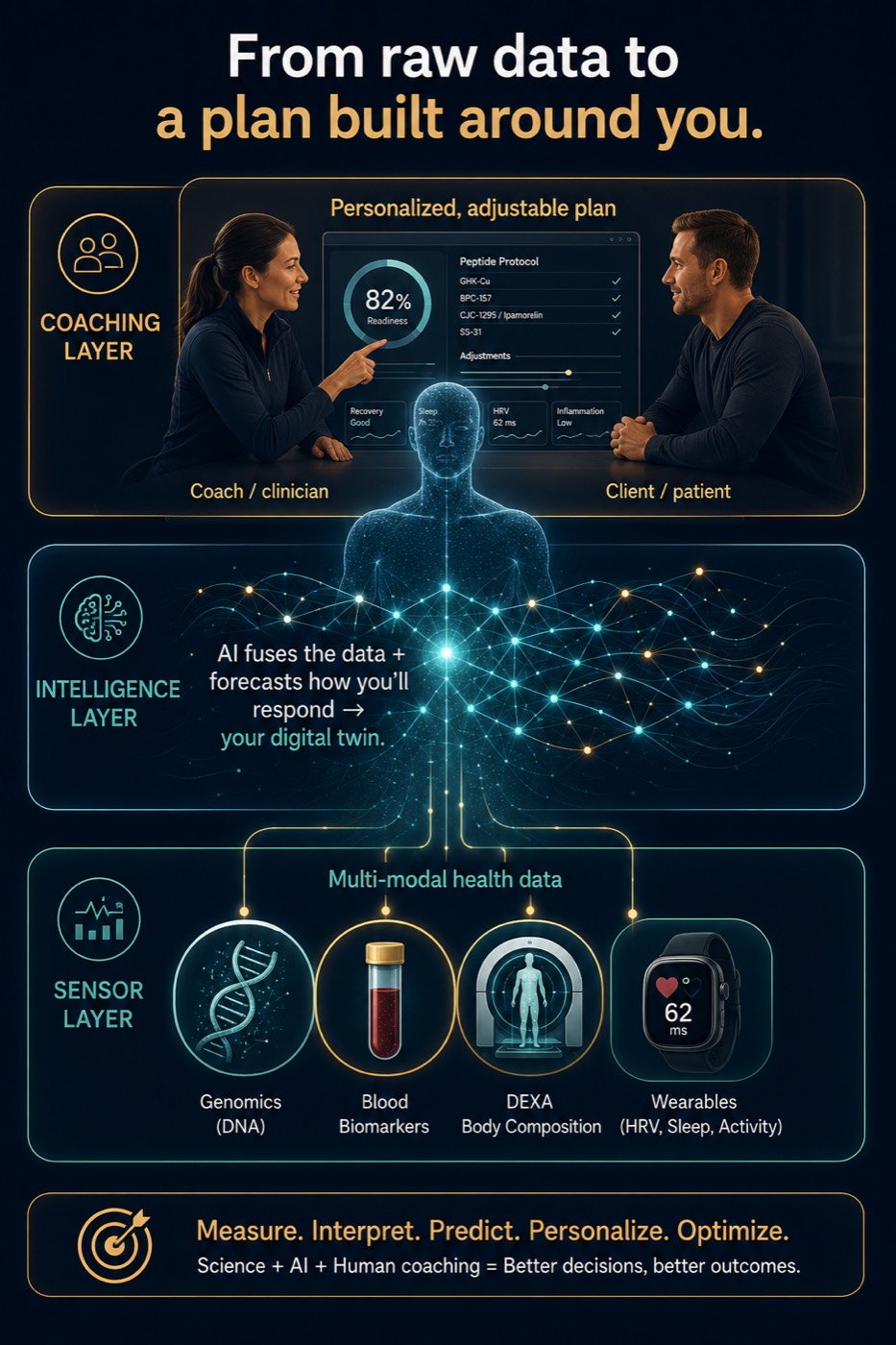
Figure 9. A Digital Twin, in Three Layers. A credible digital twin stacks three layers — sensors that measure you, AI that models how you'll respond, and a human coach or clinician who turns the forecast into decisions. The data is the input; the relationship is the product.
The frontier: what's proven, what's promising
A guide that only sold the upside would be exactly the fluffy wellness content this article exists to counter. So, precisely — and optimistically, because the trajectory genuinely warrants it:
Well established: oxytocin's biochemistry, its decline with age, its role in muscle and bone stem-cell function, and its heart-repair signaling are supported by peer-reviewed animal and human-cell studies from independent labs.[6][7][9] Its safety record for its approved obstetric use runs decades deep.
Genuinely promising: the lifespan and healthspan extension is, for now, a mouse result — but a striking one, achieved in the hardest test population with clinically accessible tools, and human trials of intranasal oxytocin for age-related conditions such as sarcopenic obesity are already underway.[8][18] This is the honest, hopeful posture the whole peptide field deserves: these are body-native molecules with favorable safety profiles and a growing stack of compelling animal and mechanistic evidence, and the smart move is to engage with that evidence early rather than dismiss it because the human trials are still being run.
Still being written: the optimal human dose, delivery, and timing; the true size of the sex difference in people; and how much of the response is governed by individual genetics. None of that is a reason to wait — it's the reason to measure before you treat, and to do it alongside a qualified professional. Oxytocin is a prescription molecule, not a podcast souvenir, and its most interesting longevity uses remain investigational. The right stance is neither hype nor cynicism, but the one this field was built for: measure first, personalize relentlessly, and let your data decide.
The Takeaway
Oxytocin's career is a parable for the entire longevity project. A molecule got a cute nickname, the nickname became a ceiling, and the real science — regeneration, sex-specificity, a 73% lifespan swing in frail old animals — sat quietly underneath, waiting for anyone willing to read past the headline. The lesson isn't "take oxytocin." It's that the gap between a molecule that transforms your healthspan and one that wastes your money is almost always information about you, paired with someone skilled enough to act on it.
That's the quiet case for planning longevity the way elite performers, national labs, and the best practitioners already do — with data, with models, and with a human who can turn both into decisions. Whether that becomes a personal Peptide Longevity Plan™, an organization's Corporate Wellness Program built to extend the productive careers of the people it depends on, or membership in a serious Longevity Club where measurement is the price of entry, the principle holds. The people who benefit most from the next decade of peptide science won't be the ones chasing the newest injectable. They'll be the ones — and the coaches and clinicians beside them — who bothered to learn how their own biology is wired, and then built a plan around the answer.
Oxytocin, it turns out, was never really about love. It was about repair. And repair, unlike romance, responds beautifully to a good plan.
Sign Up for FREE Daily Longevity Club Workshops
Sign Up for Affiliate Program (Pays 20%)
Subscribe to the Longevity & Peptide Optimization Newsletter
About the Author
Tony Medrano is CEO and co-founder of LongevityPlan.AI, a platform that integrates performance and health data from athletes and leverages a proprietary Digital Twin for Predictive Peptide Performance™ technology, wearable data, and biomarker data to deliver personalized performance optimization and longevity recommendations to athletes, coaches, organizations, businesses, government, and the military. In addition to being a 3x technology/AI company CEO with 2 successful exits, Tony has completed 3 Full Ironman Triathlons (140.6 mi) since 2019. He has degrees from Harvard University, Columbia University, and a JD/MBA from Stanford University.
Tony has been involved with AI and molecular diagnostic start-ups for 10 years, and also worked with the US Olympic Team, National Basketball Association (NBA), National Football League (NFL), Major League Baseball (MLB), Iditarod, FBI, NASA, U.S. Department of Health and Human Services (HHS), Google, Microsoft, Netflix, Bridgewater Associates, ConocoPhillips, British Petroleum, One Medical, and Jenny Craig, Inc. to provide technology, artificial intelligence and/or molecular diagnostics solutions to their employees.
One of Tony's prior companies provided Conversational AI to health, fitness, and wellness companies; another delivered access to digital libraries of British Petroleum for oil discovery; and his first was a mobile app platform funded by Softbank, which resulted in a case study published by Stanford University Press and was taught in multiple MBA programs for a decade. Tony loves to teach and mentor; he earned public school teaching credentials in NY and MA and taught inner-city high school students to give back to the underprivileged community in Harlem. He also lectured on entrepreneurship and venture capital to second-year MBA students at Stanford Business School for five years. He co-authored one of the first issued patents for mobile applications. Tony also served as a US Navy Officer commanding an emergency response team on a USN Destroyer. Tony's military-to-CEO career has recently been chosen to air on an episode of "Operation CEO," a documentary by InsideSuccess.TV, which will air on AppleTV, Prime Video & Amazon MGM Studios, YouTubeTV, and other major platforms worldwide in 2026.
Tony's Chronological Age is 55, his Metabolic Age is 41, and his Biological Age is 28. He is using a 12-peptide protocol from LongevityPlan.AI that leverages his AI-powered Digital Twin and is currently training for his 4th Ironman Triathlon.
Endnotes
- Structure and biochemistry of oxytocin (nonapeptide, six-residue disulfide ring; sequence Cys-Tyr-Ile-Gln-Asn-Cys-Pro-Leu-Gly): peer-reviewed overviews of oxytocin structure, receptors, and metabolism.
- The Nobel Prize in Chemistry 1955, Vincent du Vigneaud, "for his work on biochemically important sulphur compounds, especially for the first synthesis of a polypeptide hormone." NobelPrize.org.
- Carter CS, Porges SW. "The biochemistry of love: an oxytocin hypothesis." EMBO Reports. 2013;14(1):12–16. doi:10.1038/embor.2012.191.
- Carter CS. "Oxytocin and love: Myths, metaphors and mysteries." Comprehensive Psychoneuroendocrinology. 2022;9:100107. doi:10.1016/j.cpnec.2021.100107.
- Gao S, Becker B, Luo L, Geng Y, Zhao W, Yin Y, Hu J, Gao Z, Gong Q, Hurlemann R, Yao D, Kendrick KM. "Oxytocin, the peptide that bonds the sexes also divides them." PNAS. 2016;113(27):7650–7654. doi:10.1073/pnas.1602620113.
- Elabd C, Cousin W, Upadhyayula P, Chen RY, Chooljian MS, Li J, Kung S, Jiang KP, Conboy IM. "Oxytocin is an age-specific circulating hormone that is necessary for muscle maintenance and regeneration." Nature Communications. 2014;5:4082. doi:10.1038/ncomms5082.
- Elabd C, et al. "Oxytocin controls differentiation of human mesenchymal stem cells and reverses osteoporosis." Stem Cells. 2008;26(9):2399–2407.
- Kato C, Zheng J, Quang C, Siopack S, Cruz J, Robinson ZR, Fong N, Zhang ZA, Young P, Conboy MJ, Conboy IM. "Sex-specific longitudinal reversal of aging in old frail mice." Aging (Albany NY). 2025;17(9):2252. doi:10.18632/aging.206304. PMID:40848270.
- Wasserman AH, Huang AR, Lewis-Israeli YR, Dooley MD, Mitchell AL, Venkatesan M, Aguirre A. "Oxytocin promotes epicardial cell activation and heart regeneration after cardiac injury." Frontiers in Cell and Developmental Biology. 2022;10:985298. doi:10.3389/fcell.2022.985298.
- de Jong TR, Menon R, Bludau A, et al. "Salivary oxytocin concentrations in response to running, sexual self-stimulation, breastfeeding and the TSST: the Regensburg Oxytocin Challenge (ROC) study." Psychoneuroendocrinology. 2015;62:381–388.
- Imaging-genetics of the human oxytocin receptor: OXTR rs1042778 genotype and threat-related amygdala reactivity / antisocial behavior, sex-specific effects. Social Cognitive and Affective Neuroscience. 2016;11(8):1218. (See also OXTR variants rs53576, rs2254298.)
- The Genomics Company (BrainCelling, LLC), Pittsburgh, PA — saliva-based genomic testing and interpretation across seven body systems including hormone processing and detoxification. thegenomicscompany.com.
- Insilico Medicine, "Biology42: Generative Biologics" — GLP1R peptide design case study (5,000+ peptides in 72 hours; 14/20 active; 3 single-digit-nanomolar), Oct 2025; comments by Alex Zhavoronkov, PhD. insilico.com / EurekAlert.
- Ingraham JB, et al. "Illuminating protein space with a programmable generative model" (Chroma). Nature. 2023. Generate Biomedicines collaborations with Amgen (2022) and Novartis (2024).
- Abramson J, et al. "Accurate structure prediction of biomolecular interactions with AlphaFold 3." Nature. 2024. Nobel Prize in Chemistry 2024 (Baker; Hassabis & Jumper, DeepMind).
- PepTune: masked-diffusion multi-objective peptide design (binding, solubility, permeability, hemolysis), 2025; reviewed in "Peptide-based drug design using generative AI," Chem. Commun. (RSC), 2026, doi:10.1039/D5CC04998A.
- Comparative analyses of consumer biomarker platforms (Function Health, Superpower, Lifeforce, InsideTracker, OneTwenty), 2026 pricing and feature data; Function Health co-founded by Mark Hyman, MD; Lifeforce co-founded by Tony Robbins and Peter Diamandis.
- ClinicalTrials.gov NCT03119610, "The Physiologic Effects of Intranasal Oxytocin on Sarcopenic Obesity" — example of early human trials of oxytocin for age-related muscle conditions.
- Reviews of sex-differential effects of oxytocin on human sociality and amygdala activation: "Neuroimaging and behavioral evidence of sex-specific effects of oxytocin on human sociality." Trends in Cognitive Sciences. 2024. (Basis for the social-salience framing.)
- Breton C, et al. "Presence of functional oxytocin receptors in cultured human myoblasts." Journal of Clinical Endocrinology & Metabolism. 2002;87(3):1415–1418.
- Cho MM, DeVries AC, Williams JR, Carter CS. "The effects of oxytocin and vasopressin on partner preferences in male and female prairie voles (Microtus ochrogaster)." Behavioral Neuroscience. 1999;113(5):1071–1079.
- LeBron James's reported ~$1.5M/year body-maintenance spend (attributed to Maverick Carter, 2018; discussed on Netflix's Starting 5, 2024, where James neither confirms nor denies the figure). Reporting by Fortune, SLAM, and others documenting his cryotherapy, hyperbaric-oxygen, sleep, and recovery routine.
This article is educational and is not medical advice. Oxytocin is a prescription molecule approved for obstetric use; its longevity and regenerative applications discussed here are investigational and, in several cases, have been demonstrated only in animal or cell culture models. Consult a licensed clinician before beginning any peptide protocol, and personalize decisions to your own diagnostics and genetics.